Latakia University design proposal - Jean Dubuisson
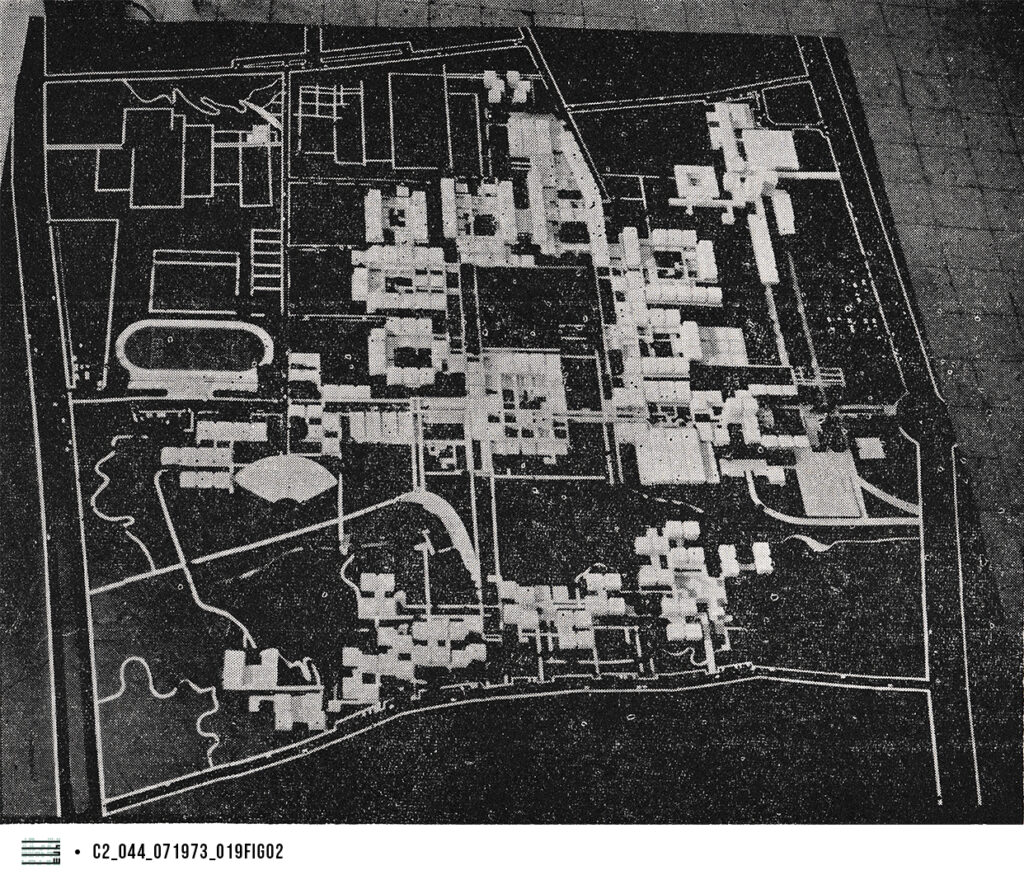
The university of Latakia was established by Legislative Decree No. 12 of 1971, and a number of international architects were invited to design its campus, including the French architect Jean Dubuisson.
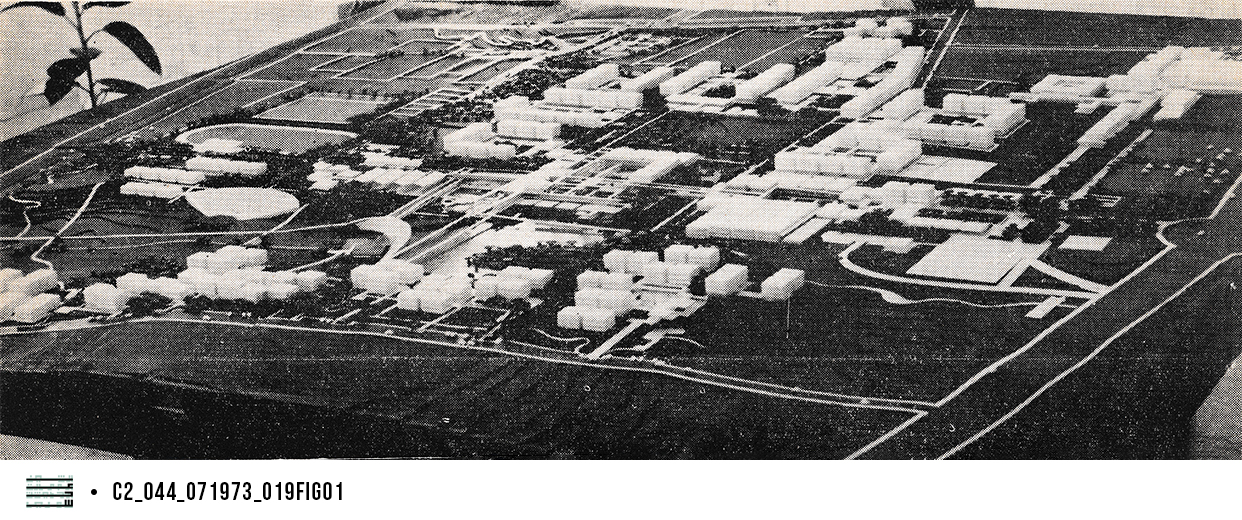
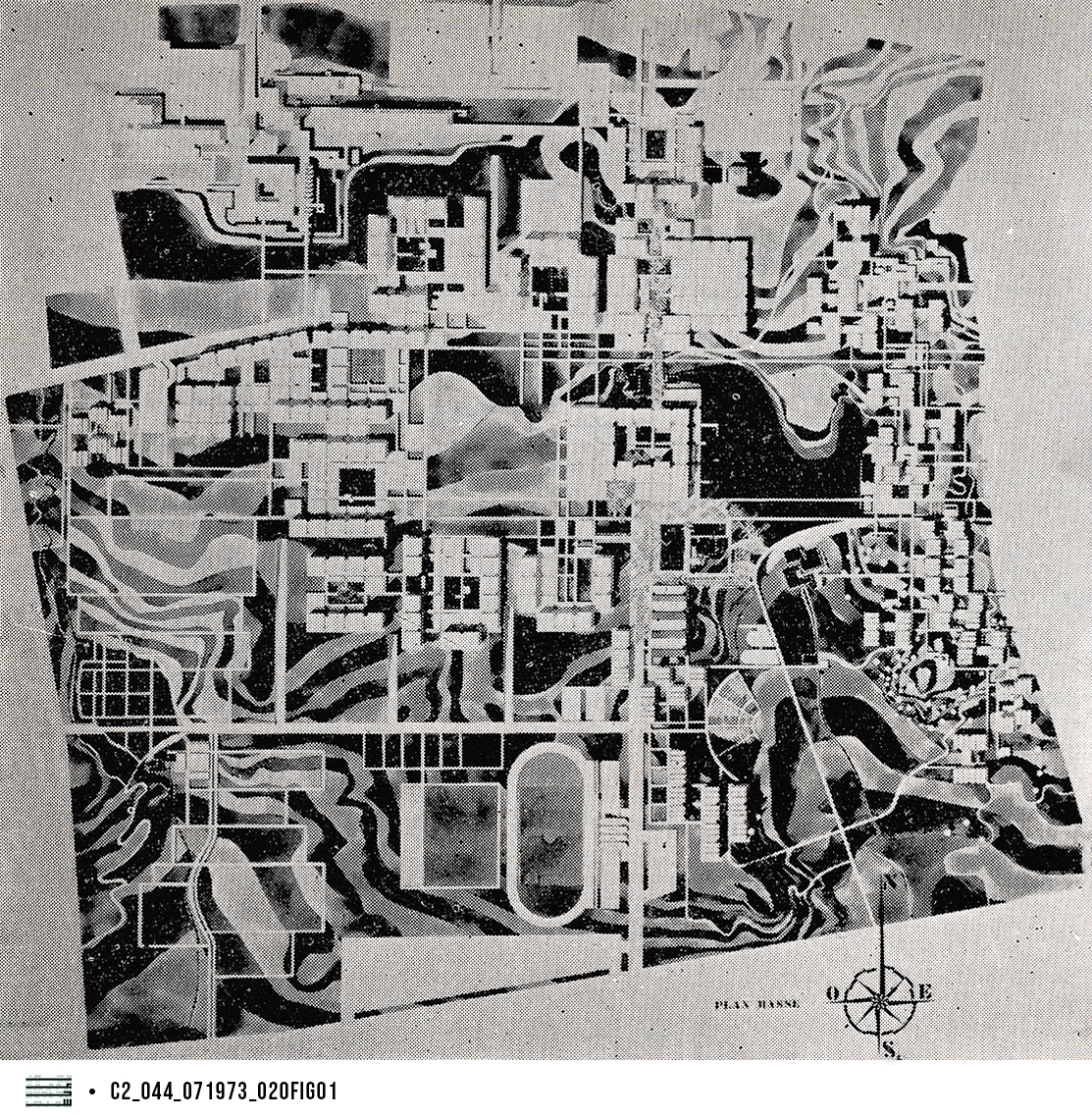
Dubuisson envisioned the university as a natural extension of the city, seamlessly blending the two. His design focused on creating adaptable, multi-purpose spaces that could accommodate the evolving sciences and curricula without compromising the university’s overall aesthetic. He also incorporated a greenbelt surrounding the project, with its density increasing towards the center, to provide an environment that harmonized with the climate and the site’s character.01
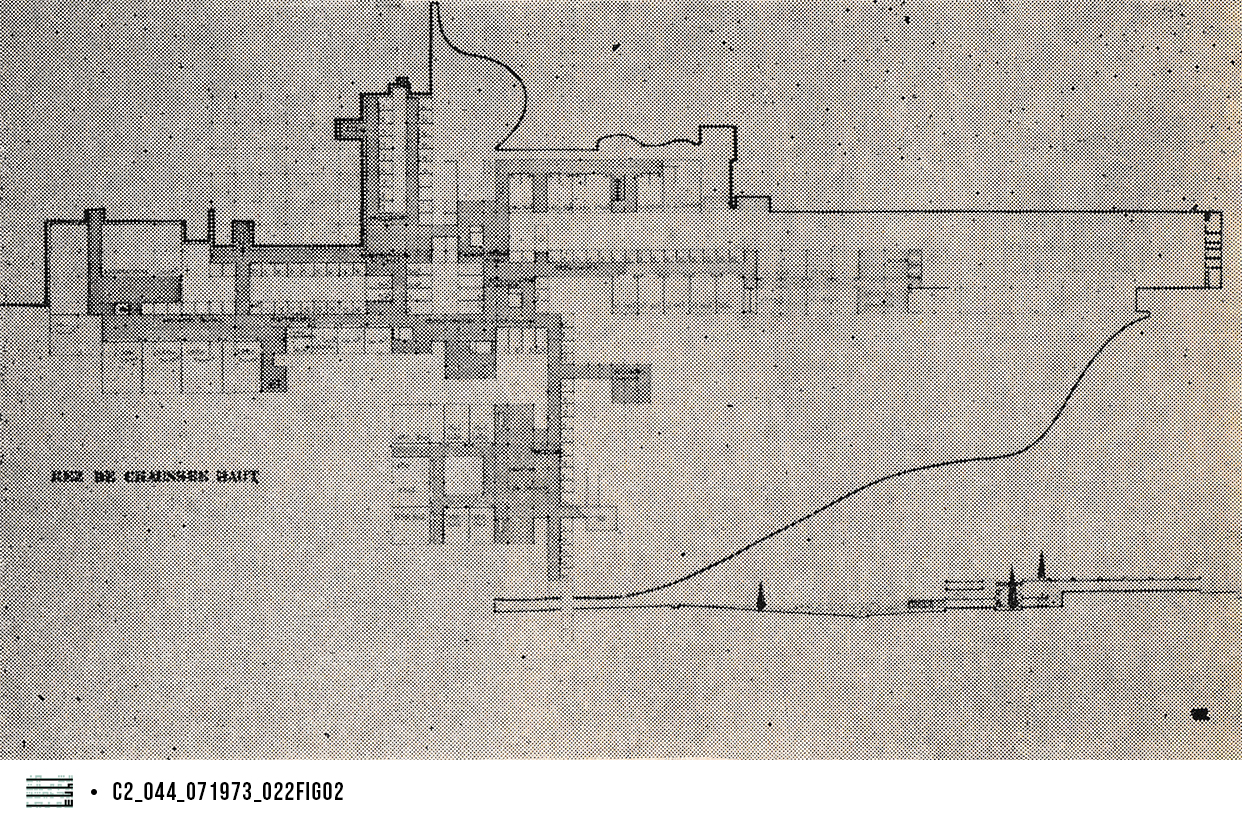
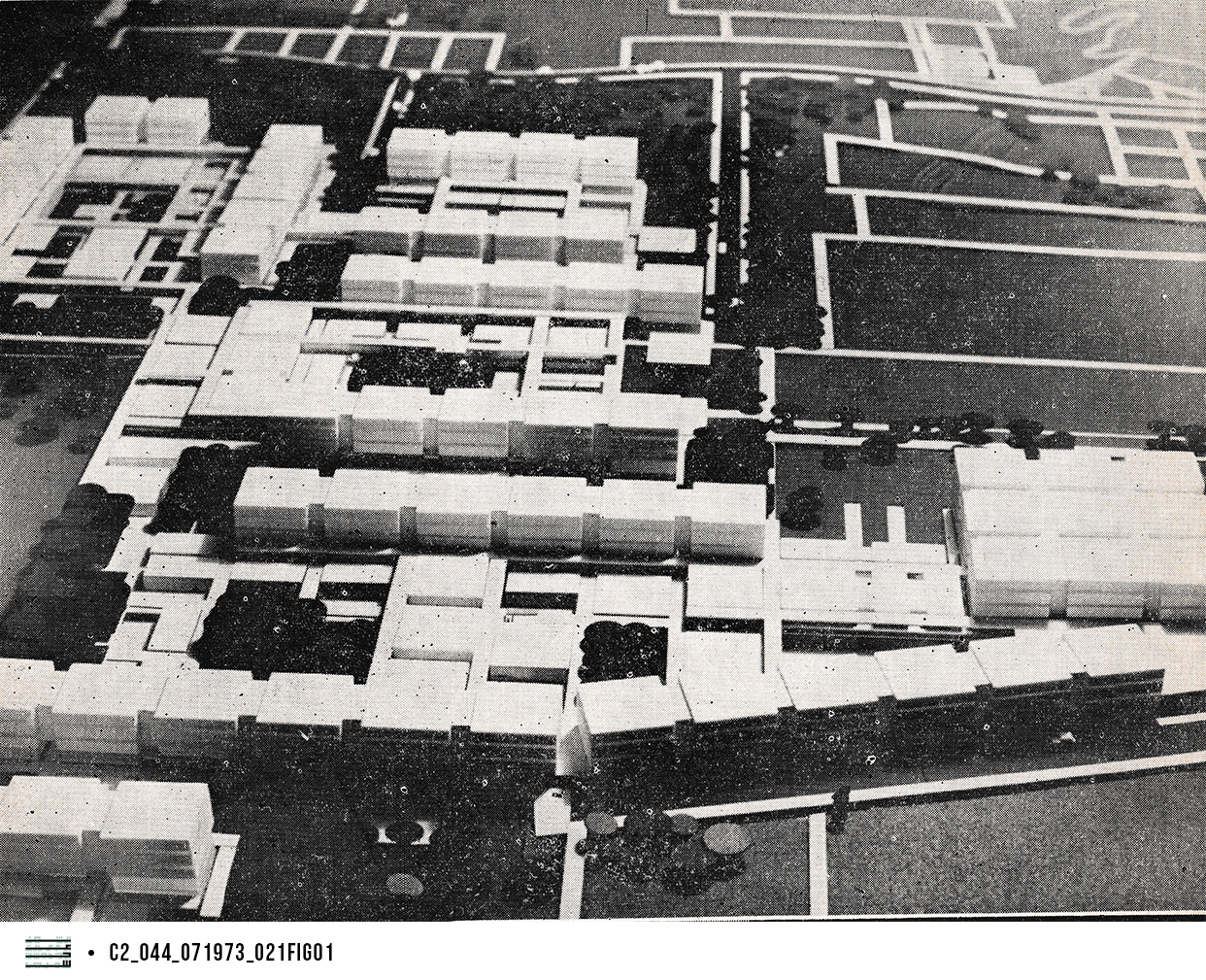
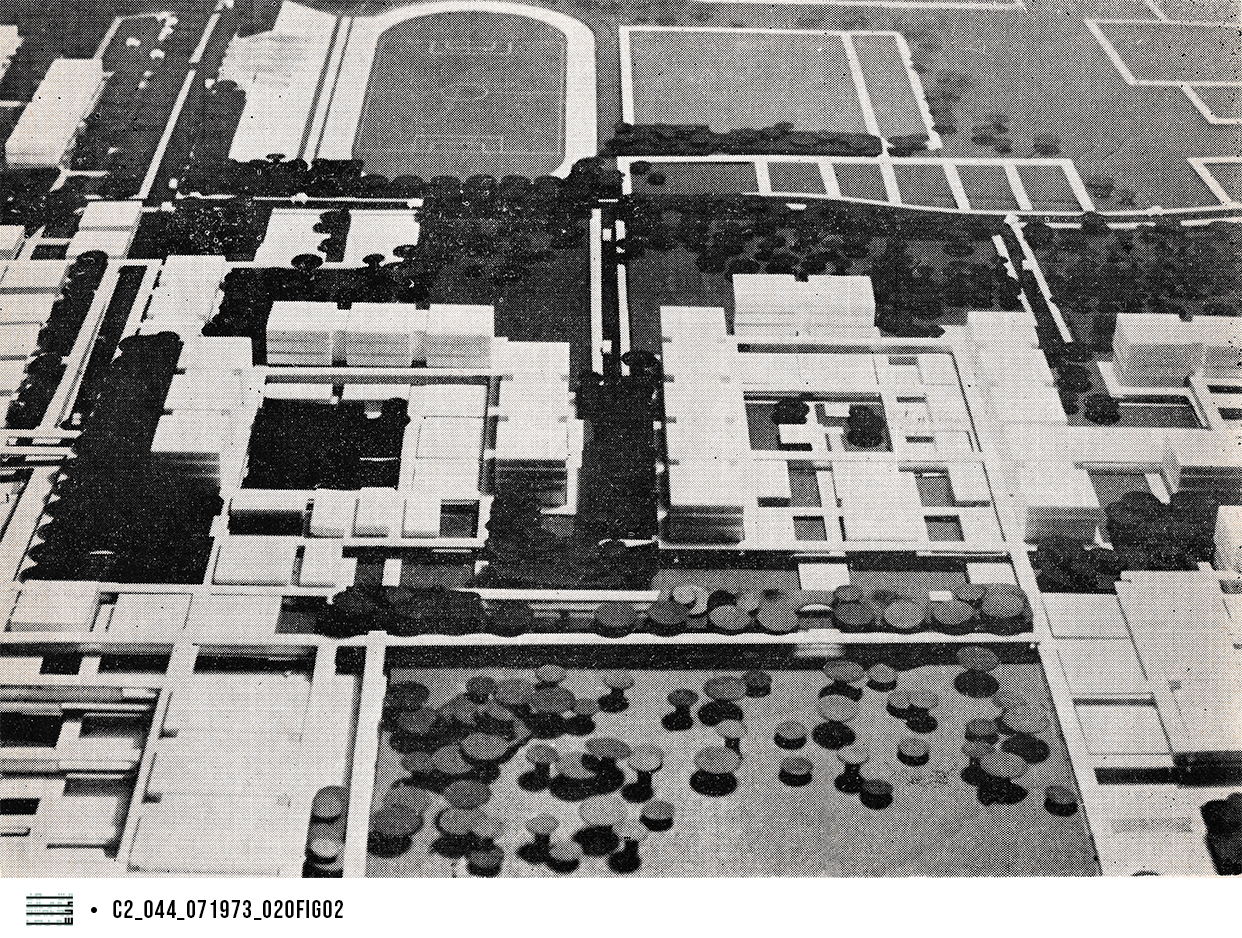
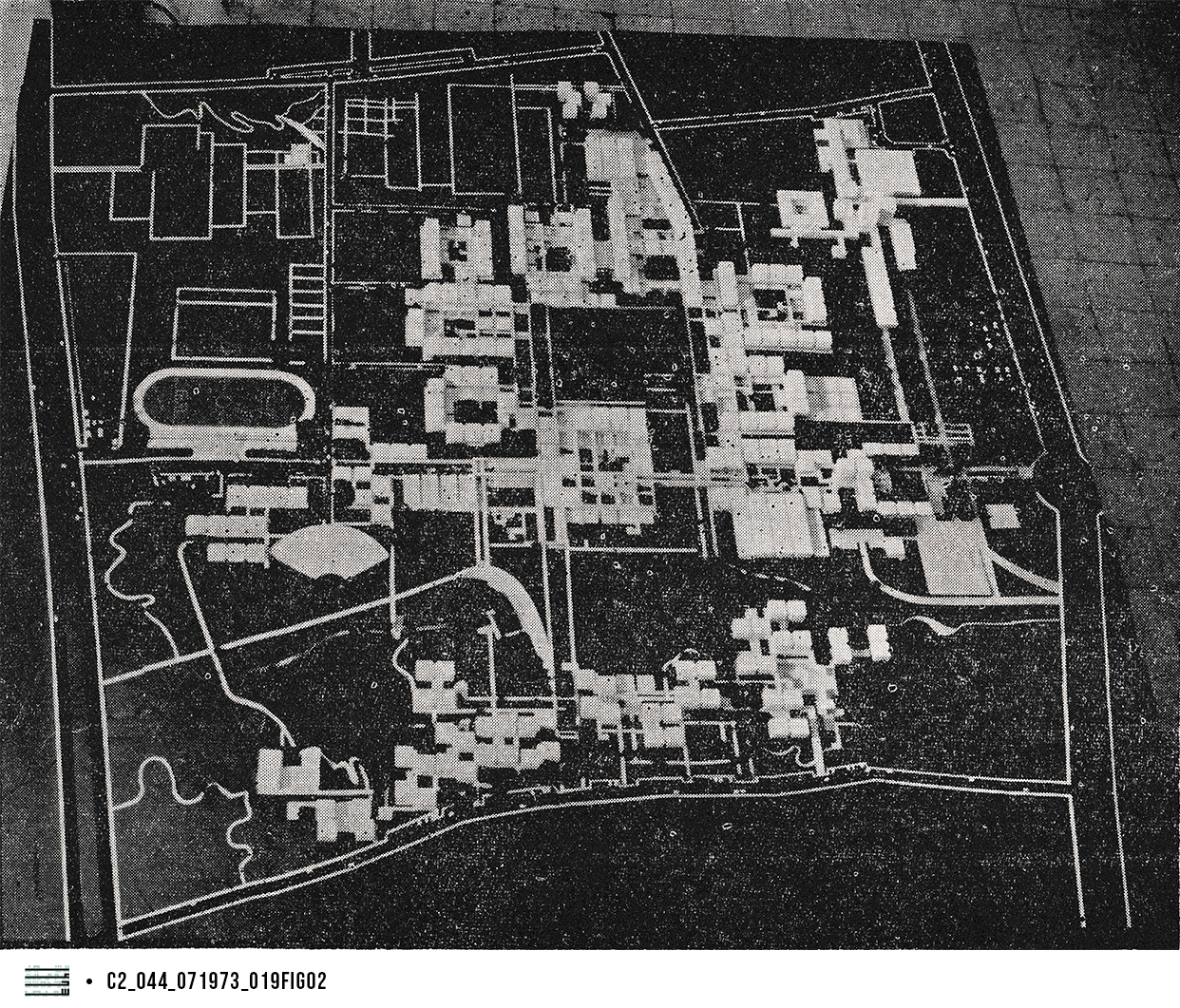
The designer created a main axis running from north to south, from which secondary axes branch out to regulate movement within the campus. Most facilities and activities are distributed along these axes. The buildings are organized into clusters that enclose internal spaces.
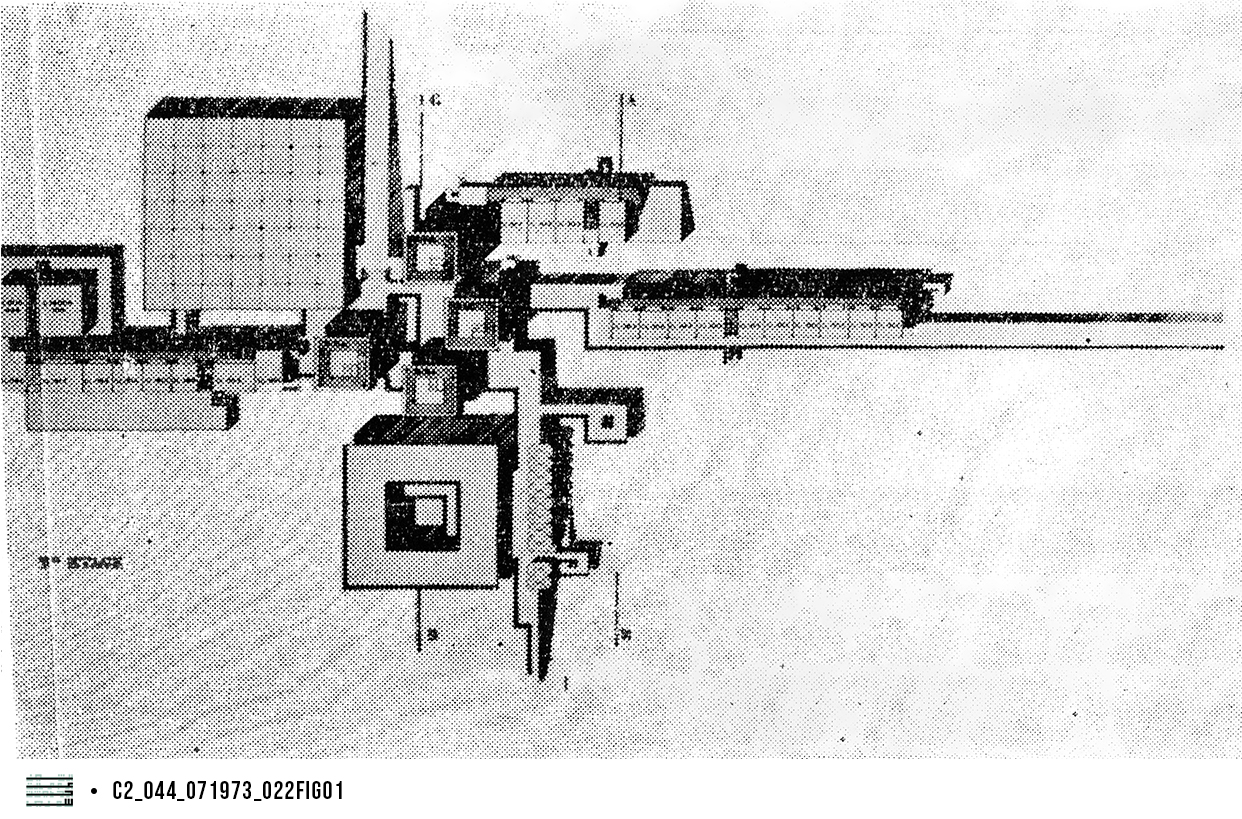
The project is divided into two main levels of circulation: a lower level serving public halls, lecture rooms, and auditoriums, and an upper level providing access to administration offices, faculty offices, and the library. The upper levels are designated for various uses according to the needs of each department. The colleges are arranged to be interconnected and easily accessible from the main axis. The university center and intermediate institutes stand out as a distinctive element in terms of design and location, situated in the northwest to achieve a degree of partial isolation from the main campus while simultaneously strengthening their connection to the city.
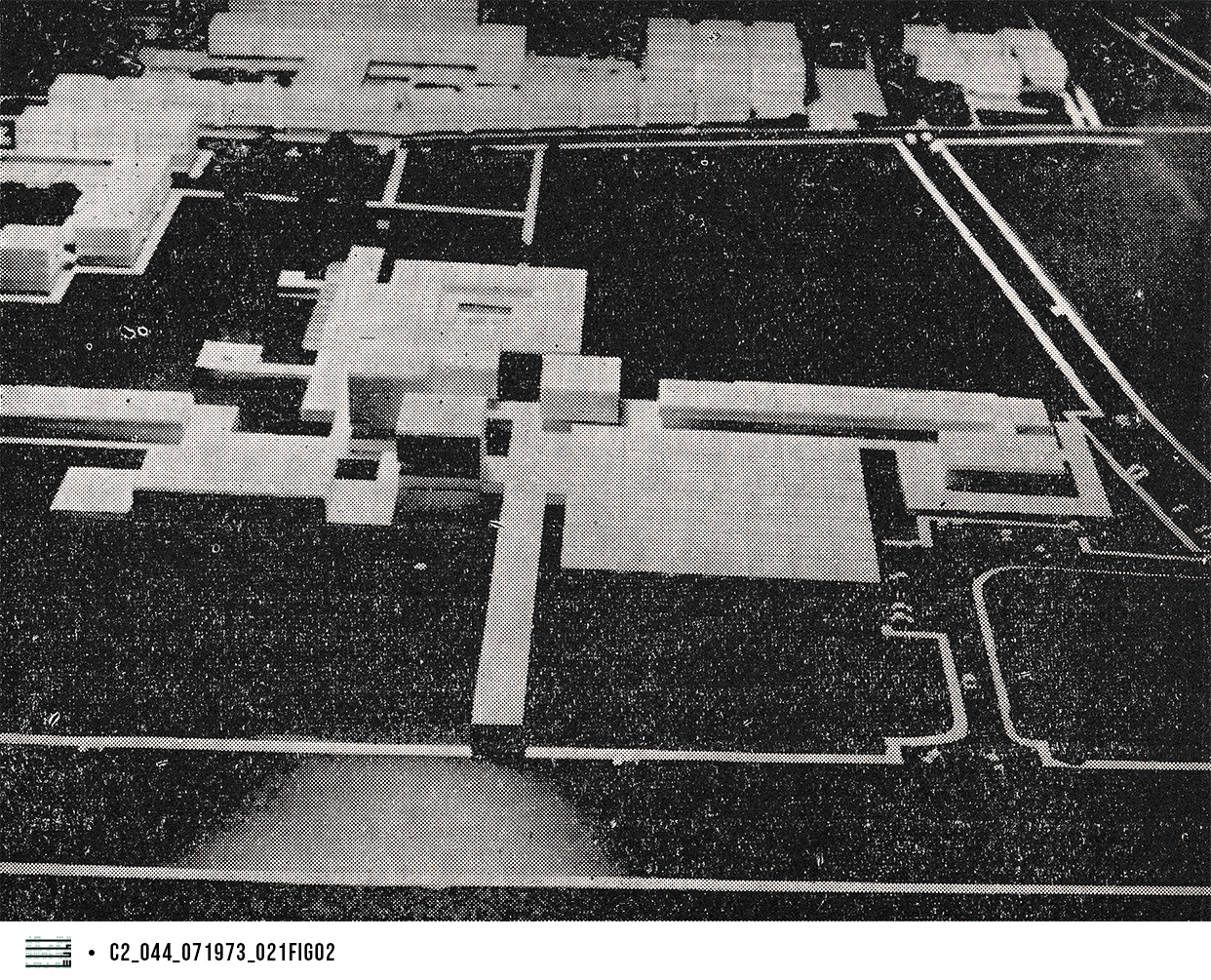
Most of the buildings in the proposal consist of four floors and a ground floor, sometimes extending on two levels depending on the terrain. This was with taking into account the scale of the city and the residential areas adjacent to the campus.02 The college buildings are simple, resembling connected rectangular blocks linked by setback blocks. The facades of the building share a common design and visual character. To allow for expansion, Dubuisson adopted a standard architectural unit measuring 16.20 x 16.20 meters, which is divisible internally and with the aim of easy and economical manufacturing on-site.03
The committee commended the Dubuisson project for its commitment to designing buildings that are adaptable and flexible in use without compromising the university’s architectural identity. It praised the architectural expression that highlighted landscaped spaces and shops that encourage social interaction, and for its skillful use of the site’s topography through the integration of elevated areas with tall buildings. However, the committee criticized the placement of the intermediate institutes in the northwest corner near the main entrance, noting their secondary status compared to the university colleges. It also observed that the location of the student housing and the access road hindered eastward expansion. The committee approved the location of the sports complex but noted the inappropriate westward orientation of the Stadium stands. It further pointed out the prominence of parking areas along the north-south axis and the overlap of pedestrian traffic with the service roads of the sports complex and the open-air amphitheater. The estimated cost of the design was 299,845,000 Syrian pounds (approximately 77 million USD at the time).04
01 Alaa al-Din Lawlah, “Musābaqat Mashrūʿ Jāmiʿat al-Lādhiqiyya: Dirāsa wa-Taḥlīl [The Latakia University Project Competition: Study and Analysis],” The Arab Engineer, July 1973, 13-43. The Arab Engineer magazine collection, Archive of Modern Architecture in Syria (AMASyria).
02 Ahmad Imam, “Fikra ʿan Barnāmaj Musābaqat Jāmiʿat al-Lādhiqiyya [Conceptual Notes on the Latakia University Design Competition Program],” Arab Engineer Magazine, July 1973, 4–9. The Arab Engineer magazine collection, Archive of Modern Architecture in Syria (AMASyria).
03 Lawlah, “[The Latakia University Project Competition: Study and Analysis],” 13-43.
04 Naman al-Zein, “Taqrīr Lajnat al-Taḥkīm [The Jury Committee Report],” The Arab Engineer, July 1973. 44-51. The Arab Engineer magazine collection, Archive of Modern Architecture in Syria (AMASyria).
01 Alaa al-Din Lawlah, “Musābaqat Mashrūʿ Jāmiʿat al-Lādhiqiyya: Dirāsa wa-Taḥlīl [The Latakia University Project Competition: Study and Analysis],” The Arab Engineer, July 1973, 13-43. The Arab Engineer magazine collection, Archive of Modern Architecture in Syria (AMASyria).
02 Ahmad Imam, “Fikra ʿan Barnāmaj Musābaqat Jāmiʿat al-Lādhiqiyya [Conceptual Notes on the Latakia University Design Competition Program],” Arab Engineer Magazine, July 1973, 4–9. The Arab Engineer magazine collection, Archive of Modern Architecture in Syria (AMASyria).
03 Lawlah, “[The Latakia University Project Competition: Study and Analysis],” 13-43.
04 Naman al-Zein, “Taqrīr Lajnat al-Taḥkīm [The Jury Committee Report],” The Arab Engineer, July 1973. 44-51. The Arab Engineer magazine collection, Archive of Modern Architecture in Syria (AMASyria).