Latakia University design proposal - George Candilis
The university of Latakia was established by Legislative Decree No. 12 of 1971, and a number of international architects were invited to design its campus, including the French architect George Candilis.
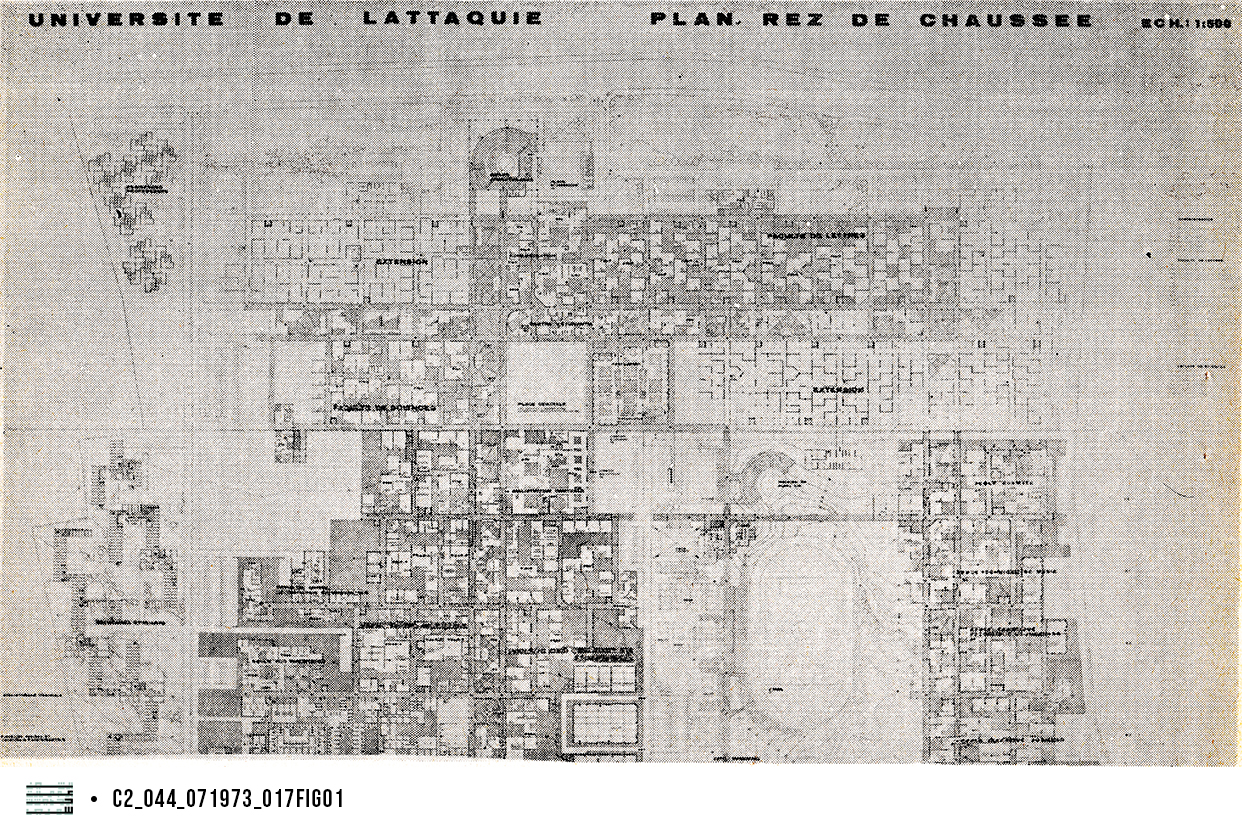
The design concept in Candilis’ proposal was based on conceiving the university as an open and interactive urban space rather than an isolated monument, thereby forming an integrated university community.01 Candilis envisioned the university as a growing residential neighborhood and a natural extension of the city. Accordingly, he sought to transfer the existing urban structure of Latakia to the university site so that the campus’s urban fabric would integrate with and reflect the city’s identity.02
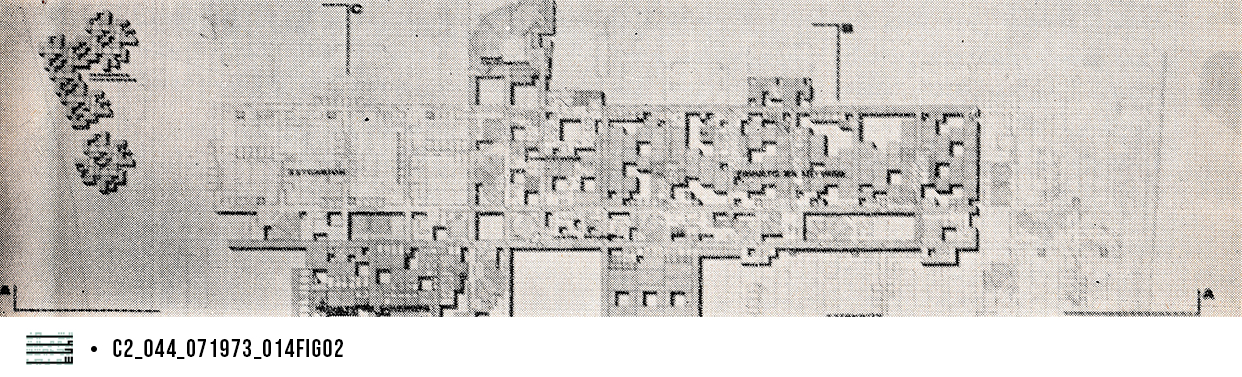
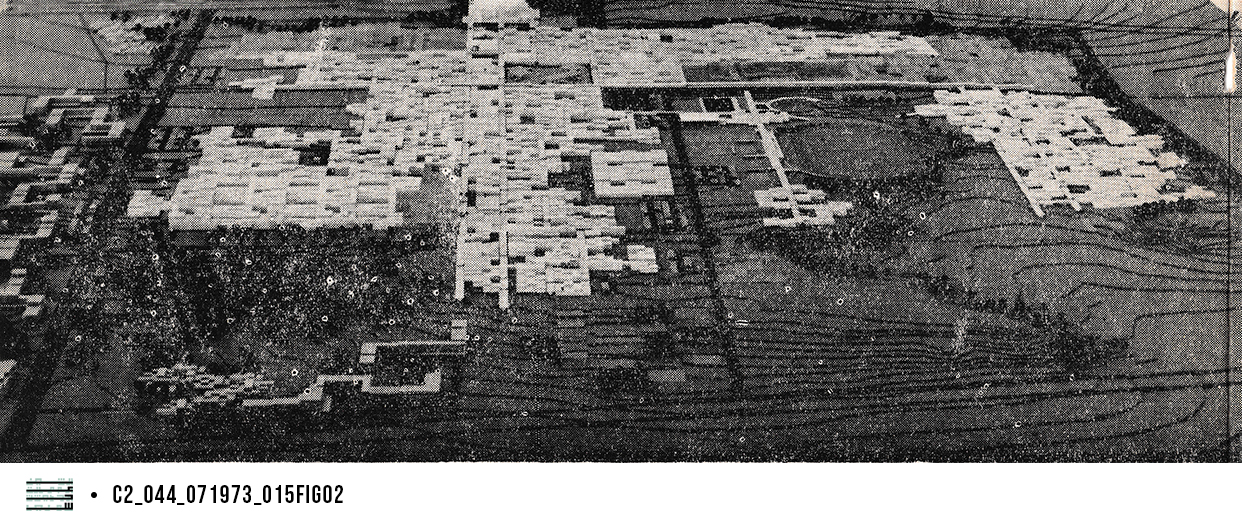
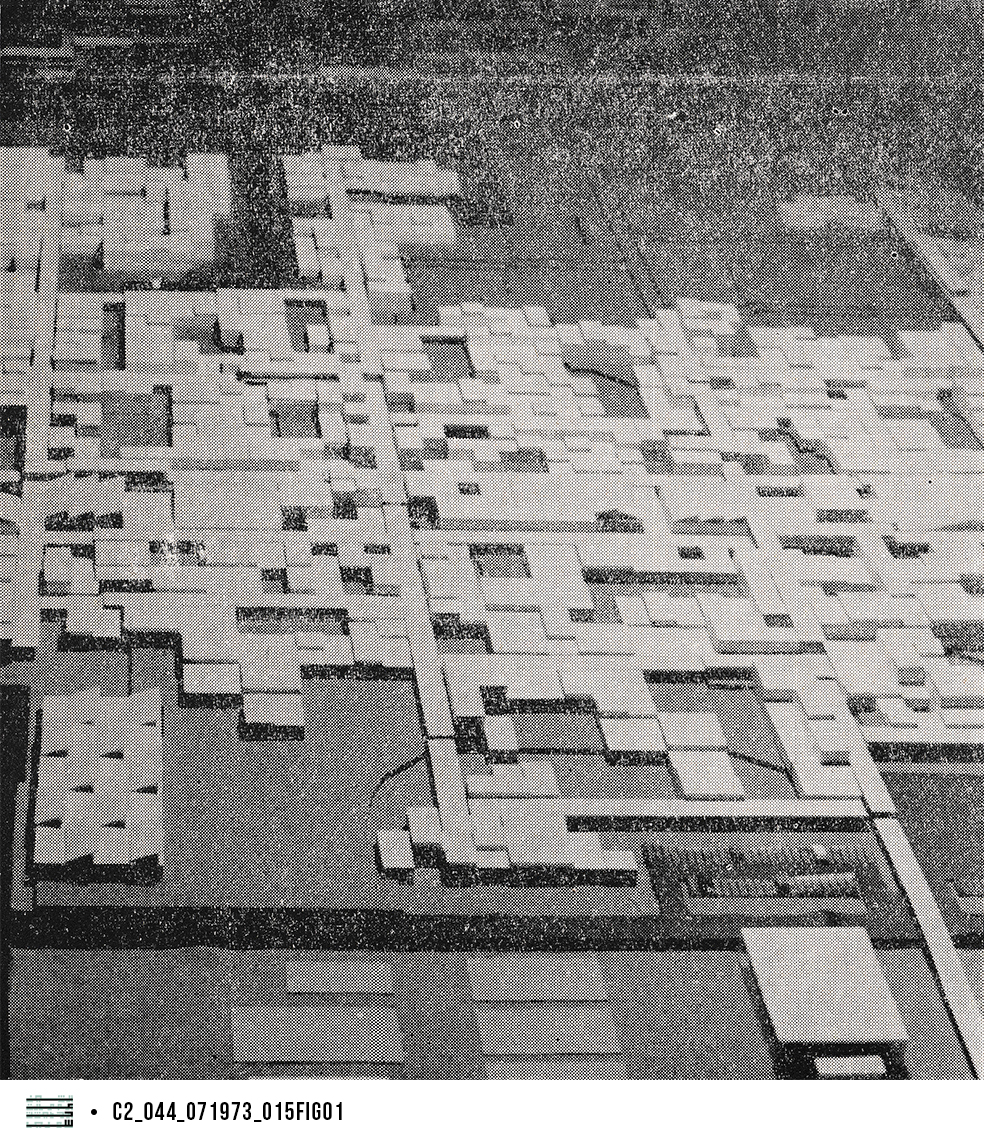
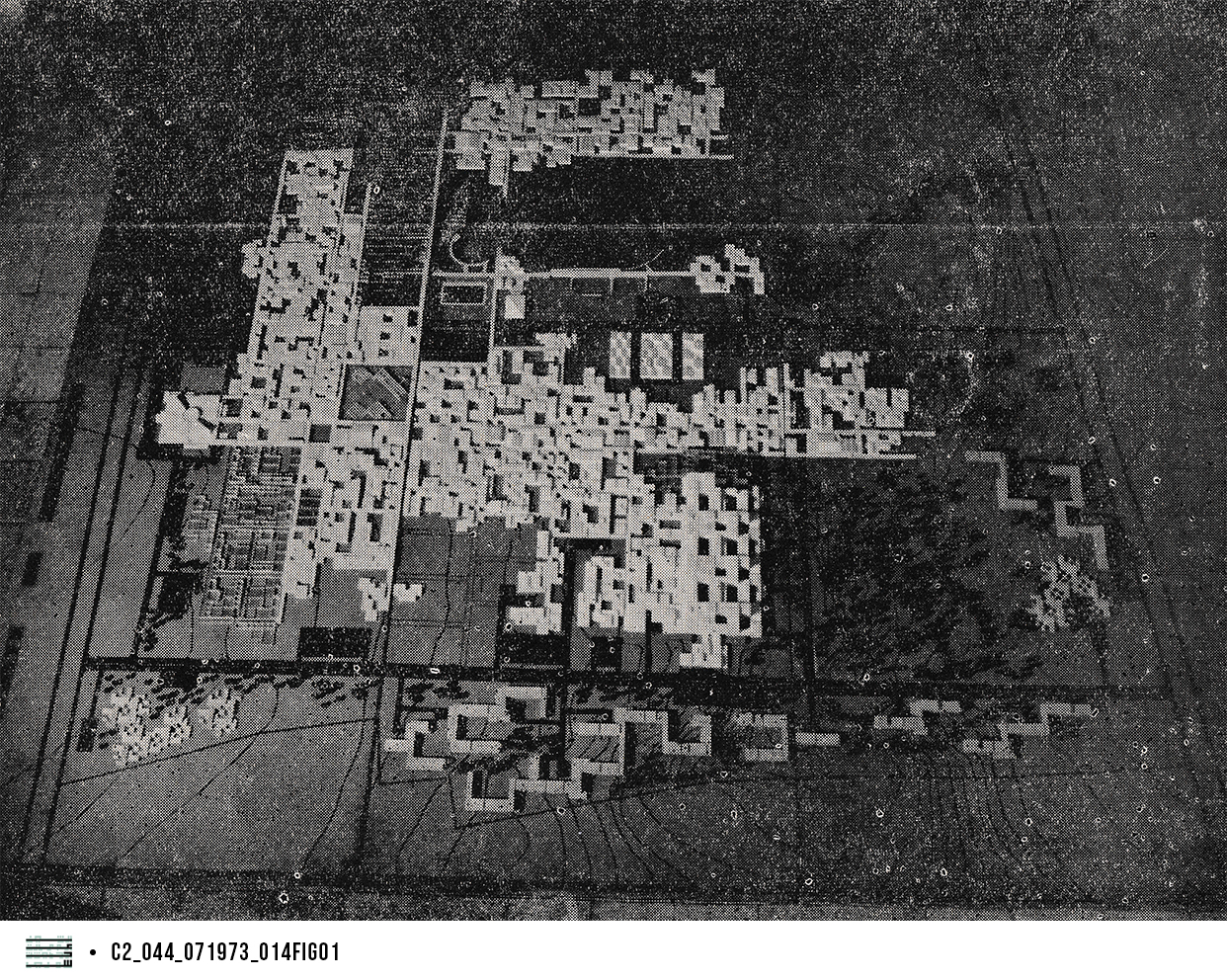
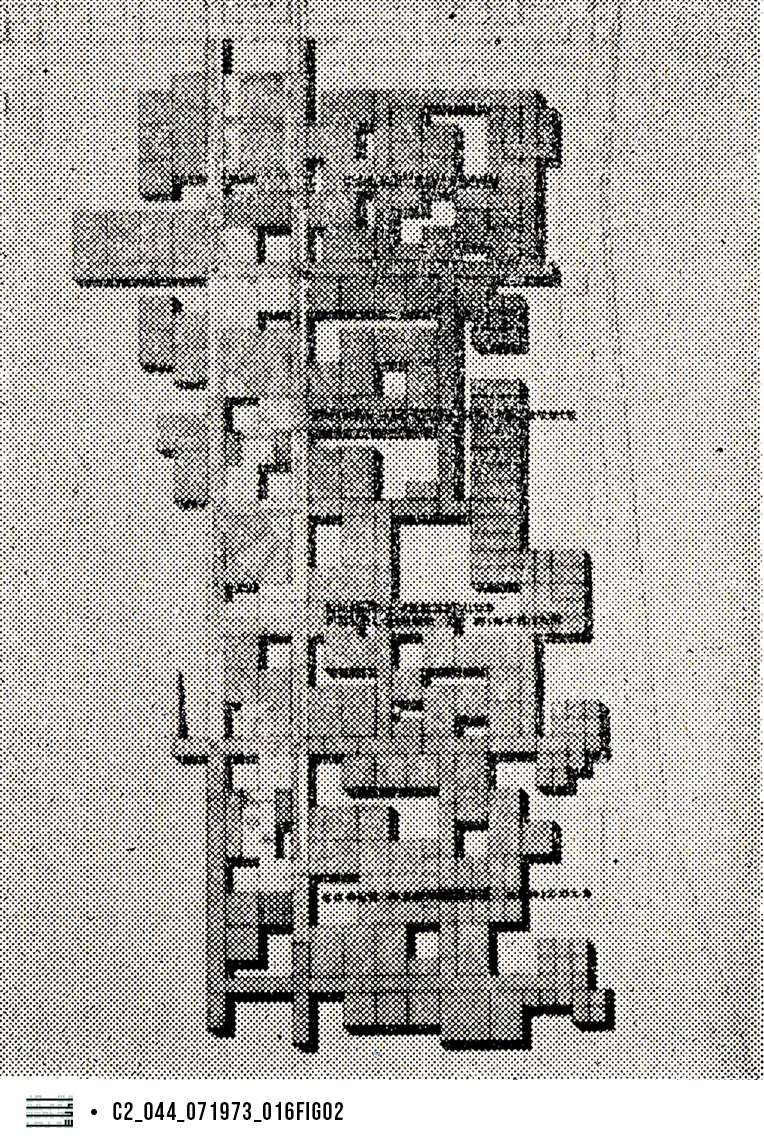
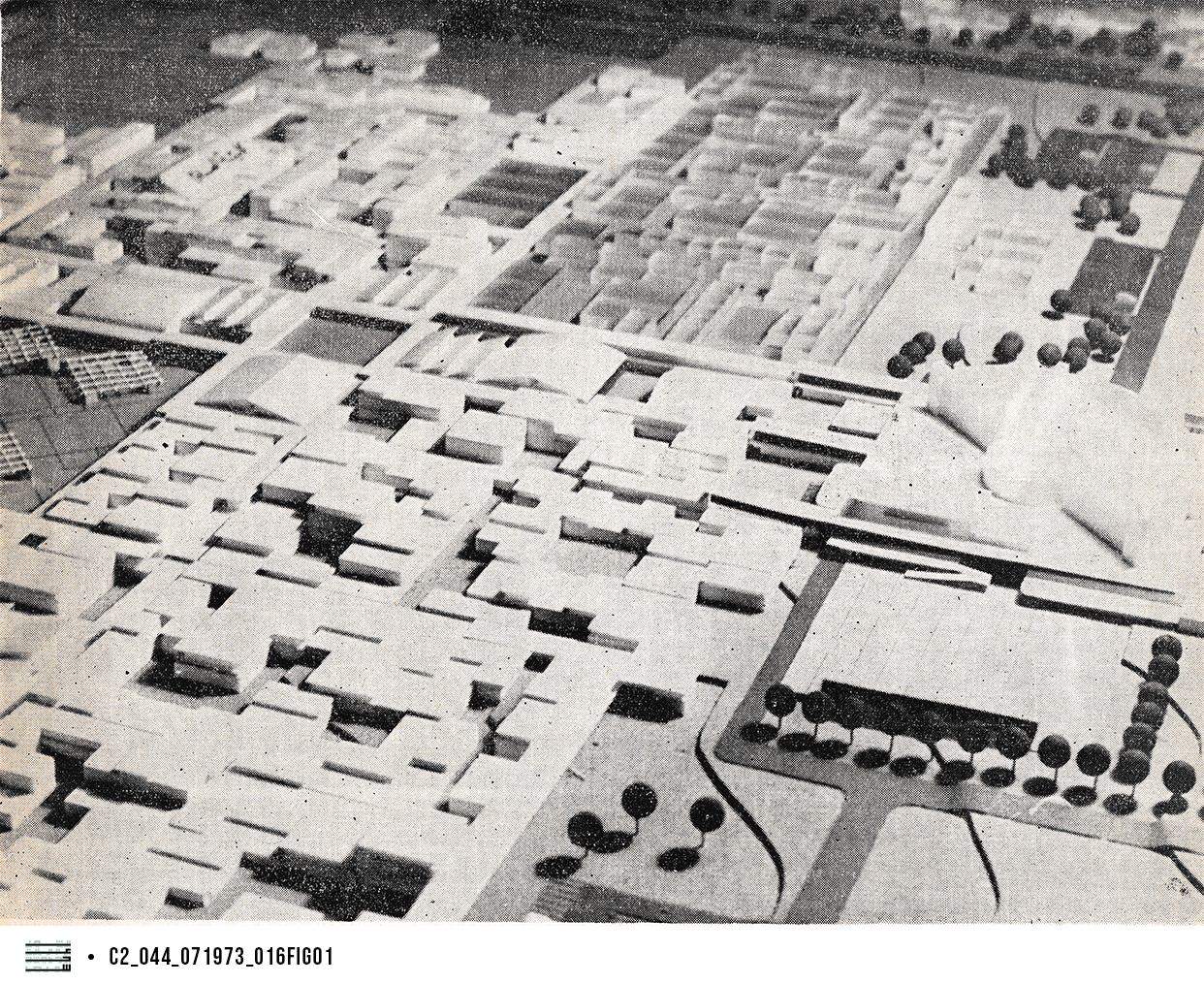
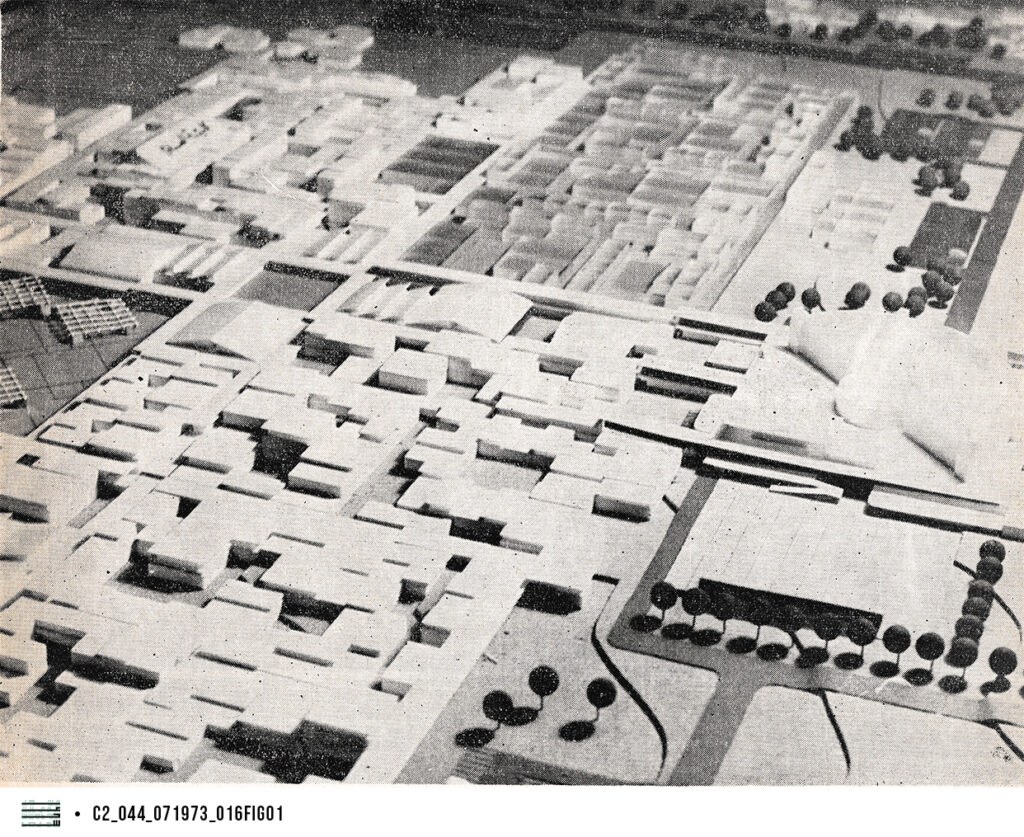
Candilis drew on the urban network of traditional Arab neighborhoods in order to respond to the city’s natural climatic conditions. Consequently, he developed a chessboard-like architectural fabric composed of low-rise, interlocking blocks spread over a wide area, interspersed with internal courtyards, open spaces, and long covered corridors inspired by traditional covered Arab markets. Through this design, Candilis also aimed to establish a human scale similar to that employed in residential architecture, thereby creating a comfortable urban environment for students.
The main square in Candilis’s proposal is the central element that organizes the overall layout. Located at the intersection of two main axes, it is surrounded by administration, services, restaurants, and the central library, serving as a public space for activities and celebrations. A large amphitheater is positioned at the main entrance of the campus, connecting the university to the city, and is surrounded by a plaza that facilitates access during events. The natural topology of the site dictated the division of faculties into two sections: the faculties of science, medicine, and the university hospital to be located in the west, while the intermediate institutes to be situated in the east, with areas designated for future expansion. Each faculty has its own independent plot of land connected to an internal road network, and its administrative offices to be located on the periphery. Shared academic services, such as lecture halls and libraries, are clustered along two main axes, north-south and east-west. Student housing is distributed in a linear fashion along the university and city boundaries to ensure connectivity. An open sports complex connects the main square to the faculties and institutes, utilizing the site’s topography to create amphitheaters. In the south, the olive groves were preserved for the agricultural college’s experiments, and the university hospital to be built nearby in a quiet, green location easily accessible from the city and surrounding areas. The hospital was designed as a teaching and general facility with a 30% expansion potential.03
01 Nihad Jamil Abdullah, “Ḥawla Mashrūʿ al-Burūfisūr Candilis li-Bināʾ Jāmiʿat al-Lādhiqiyya [On Professor Candilis’s Project for the Construction of Latakia University],” The Arab Engineer, October 1974, 36-39. The Arab Engineer magazine collection, Archive of Modern Architecture in Syria (AMASyria).; Alaa al-Din Lawlah, “Musābaqat Mashrūʿ Jāmiʿat al-Lādhiqiyya: Dirāsa wa-Taḥlīl [The Latakia University Project Competition: Study and Analysis],” The Arab Engineer, July 1973, 13-43. The Arab Engineer magazine collection, Archive of Modern Architecture in Syria (AMASyria).
02 Ibid.
03 Ibid.
04 Naman al-Zein, “Taqrīr Lajnat al-Taḥkīm [The Jury Committee Report],” The Arab Engineer, July 1973. 44-51. The Arab Engineer magazine collection, Archive of Modern Architecture in Syria (AMASyria).
05 Abdullah, [On Professor Candilis’s Project for the Construction of Latakia University],” 36-39.
In his design, Candilis developed a standardized 6x6x6 meter structural unit, which served as the foundation for a comprehensive organizational and structural framework encompassing buildings and open spaces. The unit’s purpose was also to simplify manufacturing and implementation processes at the various stages of the project, while simultaneously offering the flexibility necessary for the university’s future growth and expansion. This unit represented the core of the project’s structure, thanks to its prefabrication and functional integration. Its components were planned for on-site manufacturing to ensure rapid and cost-effective execution, with the possibility of complete construction using local labor without the need for foreign expertise.
The jury commended Candelis’s vision for a human-centered university design and his efforts to draw inspiration from local architecture. They also appreciated his attention to the site’s topography and the design’s suitability to its contours. However, the jury noted several observations, including the need to relocate the Faculty of Science closer to the university center to enhance academic interaction, the potential unsuitability of the current location for intermediate institutes due to expansion constraints, and the proximity of the residences to busy roads, which could negatively impact the living environment. The jury also observed that pedestrian traffic within the campus is extensive and lengthy, with weak connectivity between the sports area and the residences and the city as well. They further noted difficulties in emergency vehicle access to certain departments and the complexities of implementing the project in phases and operating cranes within the workshops.04 As for the architect Jean Bet Clos, he considered the project to have a distinctive Arab character, but it tends to repeat the past, preferring tall buildings that reflect a modern urban trend.05 The estimated cost of the proposed project reached 100,750,000 Syrian pounds (approximately 26,000 USD at the time).
01 Nihad Jamil Abdullah, “Ḥawla Mashrūʿ al-Burūfisūr Candilis li-Bināʾ Jāmiʿat al-Lādhiqiyya [On Professor Candilis’s Project for the Construction of Latakia University],” The Arab Engineer, October 1974, 36-39. The Arab Engineer magazine collection, Archive of Modern Architecture in Syria (AMASyria).; Alaa al-Din Lawlah, “Musābaqat Mashrūʿ Jāmiʿat al-Lādhiqiyya: Dirāsa wa-Taḥlīl [The Latakia University Project Competition: Study and Analysis],” The Arab Engineer, July 1973, 13-43. The Arab Engineer magazine collection, Archive of Modern Architecture in Syria (AMASyria).
02 Ibid.
03 Ibid.
04 Naman al-Zein, “Taqrīr Lajnat al-Taḥkīm [The Jury Committee Report],” The Arab Engineer, July 1973. 44-51. The Arab Engineer magazine collection, Archive of Modern Architecture in Syria (AMASyria).
05 Abdullah, [On Professor Candilis’s Project for the Construction of Latakia University],” 36-39.