Latakia University design proposal - Massimo Ciamarra
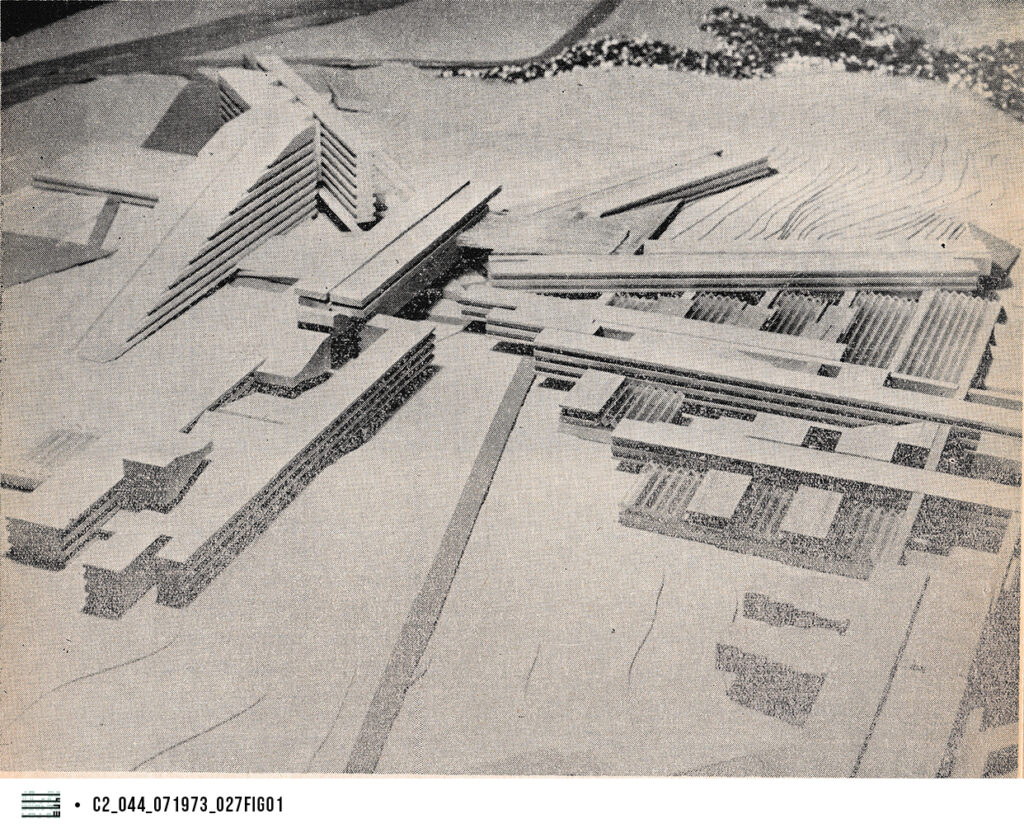
The university of Latakia was established by Legislative Decree No. 12 of 1971. The design of its campus was dictated through an architectural competition in which a number of international architects were invited to participate, including the Italian architect Massimo Ciamarra.
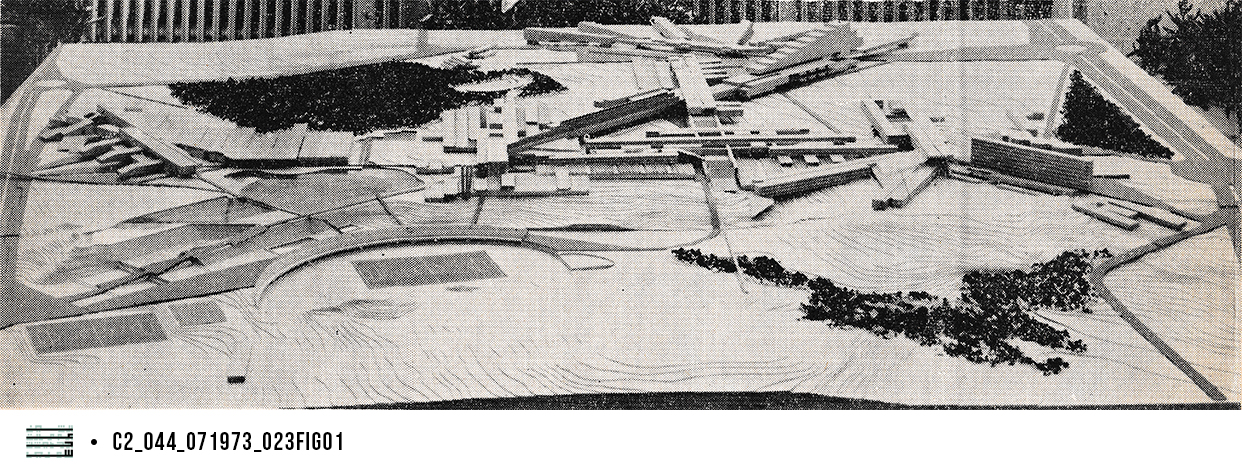
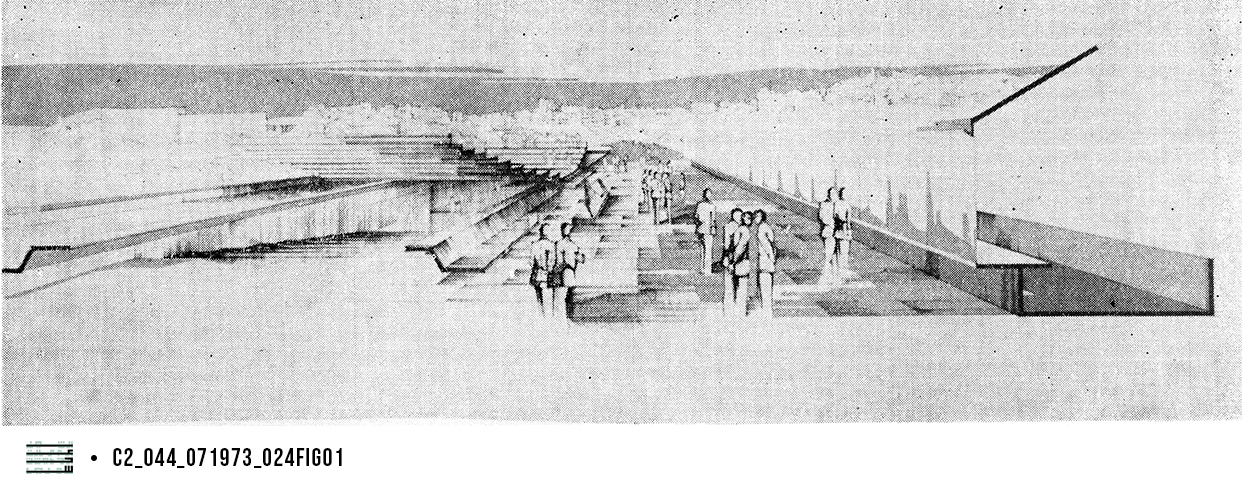
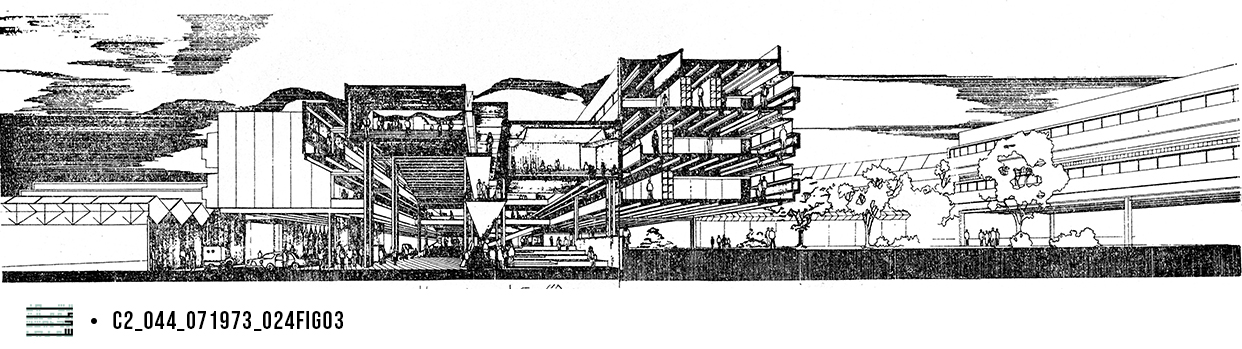
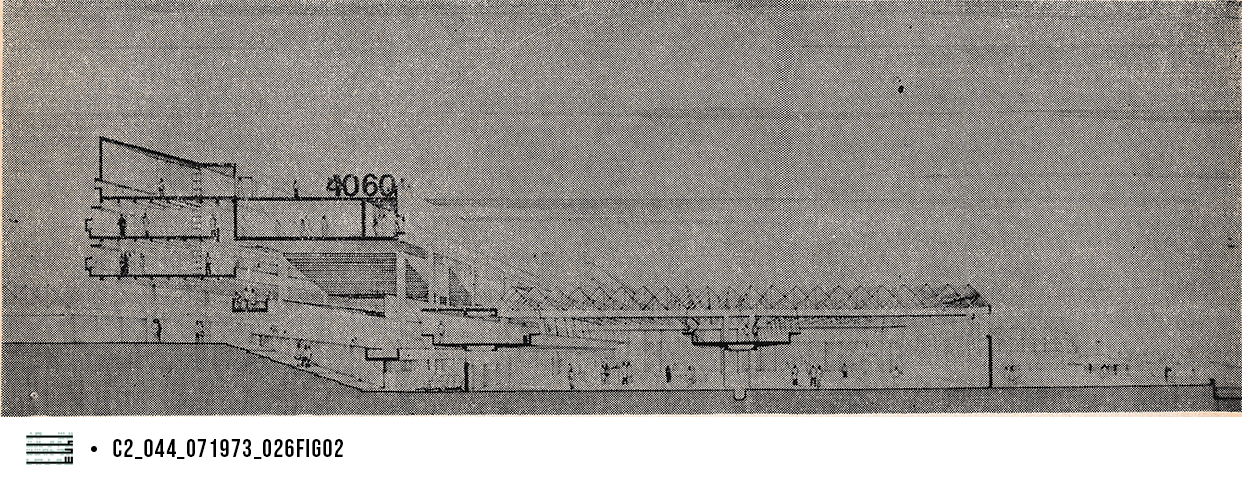
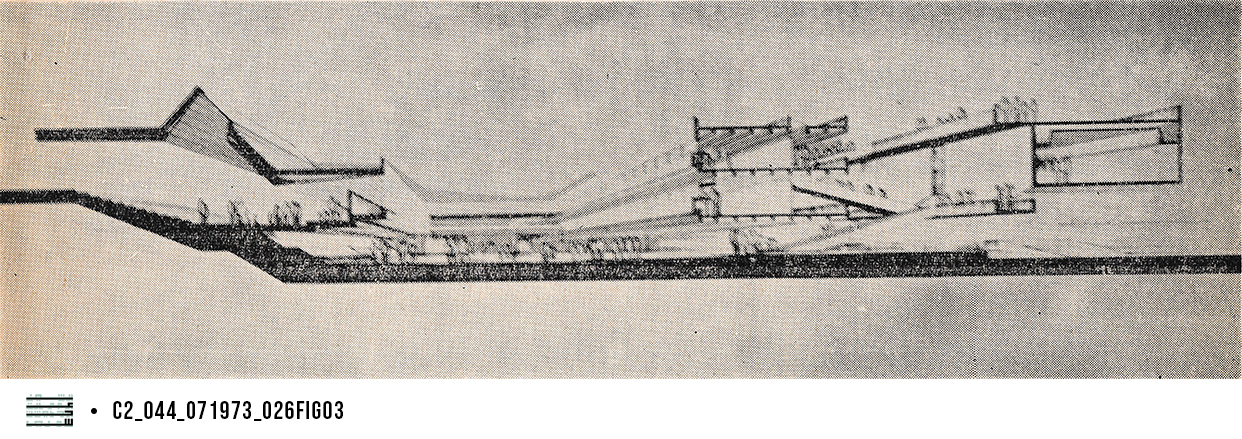
In his proposal, Ciamarra conceived the university as a “system of places,” organized along pedestrian axes that intersect with the classrooms both above and below, which he identified as the most heavily used spaces. This design aims to eliminate any distinction between circulation areas and functional spaces. The university forms a continuous fabric of spaces of varying sizes and dimensions, both open and covered, where activities take place on multiple levels, without being reduced to mere buildings and façades. It incorporates a “fourth dimension” of design, allowing the configuration of activities to adapt in response to changes in the educational system.01 According to Ciamarra, although the university functions as a neighborhood within the city, its architectural treatment differs from that of residential areas, a distinction reflected in his design.02 He also noted that the establishment of the university would reshape the city’s urban plans, while potentially preserving the site’s original distinctive characteristics.03
Siamara’s design vision was based on four main objectives that formed the general framework of the university’s planning and architecture:04
The first goal was economic, which focused on organizing relationships between spaces and users efficiently and clearly, with economic management based on scalable equipment and low-maintenance materials. To speed up the design process, he adopted an architectural system based on simple, repetitive units that combine modern prefabricated construction techniques with traditional methods based on local materials and labor.
01 Concours International Sur Invitation Pour Le Projet De Construction De L’Université: 1973 Lattaquié République Arabe Syrienne (Lattakia: 1973).
02 Alaa al-Din Lawlah, “Musābaqat Mashrūʿ Jāmiʿat al-Lādhiqiyya: Dirāsa wa-Taḥlīl [The Latakia University Project Competition: Study and Analysis],” The Arab Engineer, July 1973, 13-43. The Arab Engineer magazine collection, Archive of Modern Architecture in Syria (AMASyria).
03 Concours International Sur Invitation Pour Le Projet De Construction De L’Université: 1973 Lattaquié République Arabe Syrienne.
04 Ibid.
The second objective was flexibility and growth, as he explained that university spaces begin independent of each other, and seek to interact and “coincide” with each other over time, with intermediate stages that allow interaction at different levels. For Ciamarra, adaptation was defined as an organization based on sequence of spaces, services, etc., rather than the arrangement of functions. For Ciamarra, flexibility is achieved when designing spaces through a multi-level system, where each level has a specific function, and the character of the design comes from the configuration of buildings and the spaces between them rather than generic networks of connection and movement. Ciamarra acknowledges that the growth of a university may not be achieved with the same architectural system and so he sought to plan for the future through growth systems that respond to changes in research and laboratory requirements, not to changes in student numbers.
The third objective focused on technology. The project combined reinforced and precast concrete with steel, providing flexibility in construction and the use of local materials. Raw concrete also contributes to reduced maintenance costs and weather resistance.
The fourth objective is the configuration of form, which embodies the university’s vision as an interconnected fabric of paths and axes, with corridors, terraces, roofs, and stairs serving as social spaces for interaction and discussion.
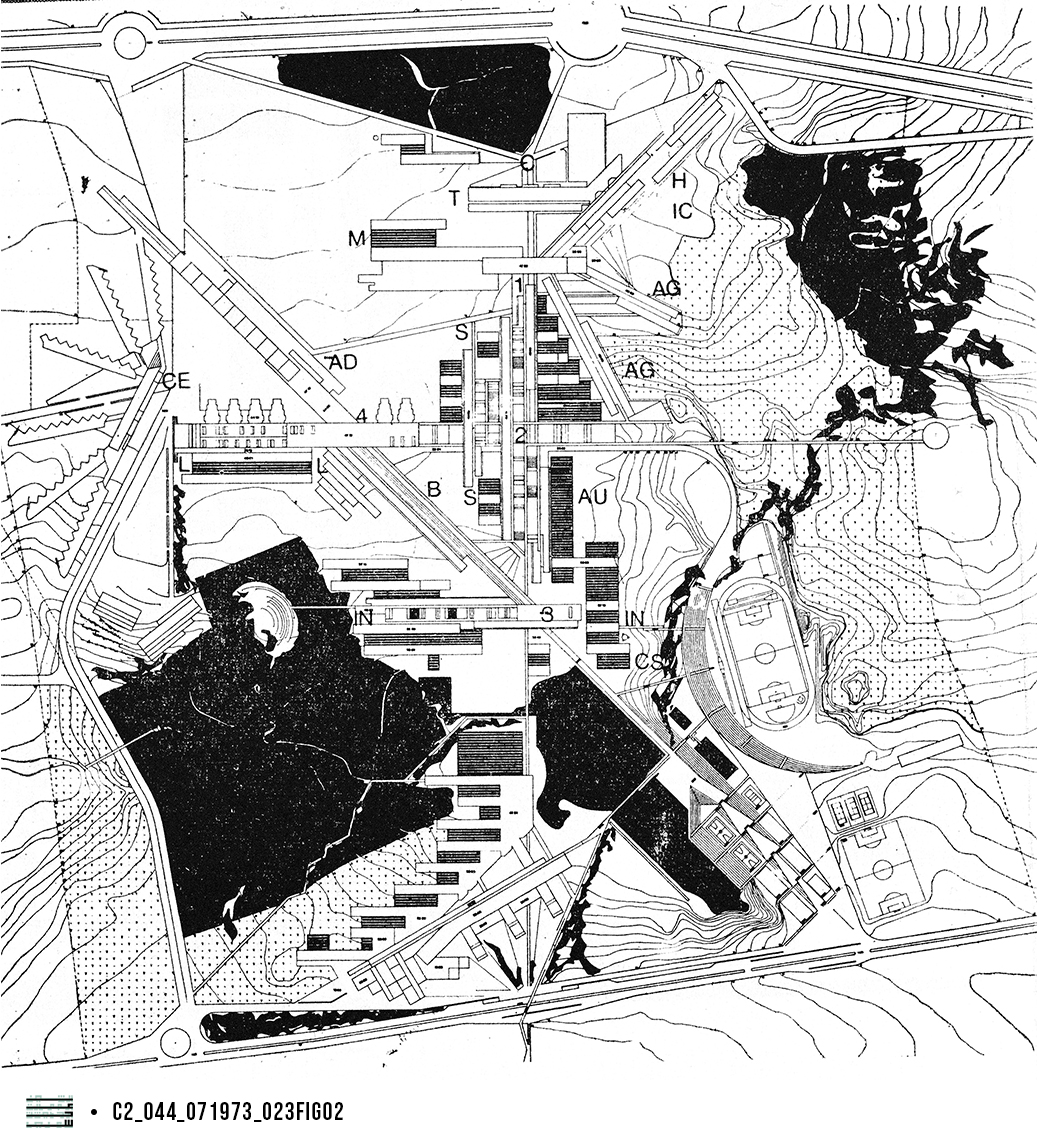
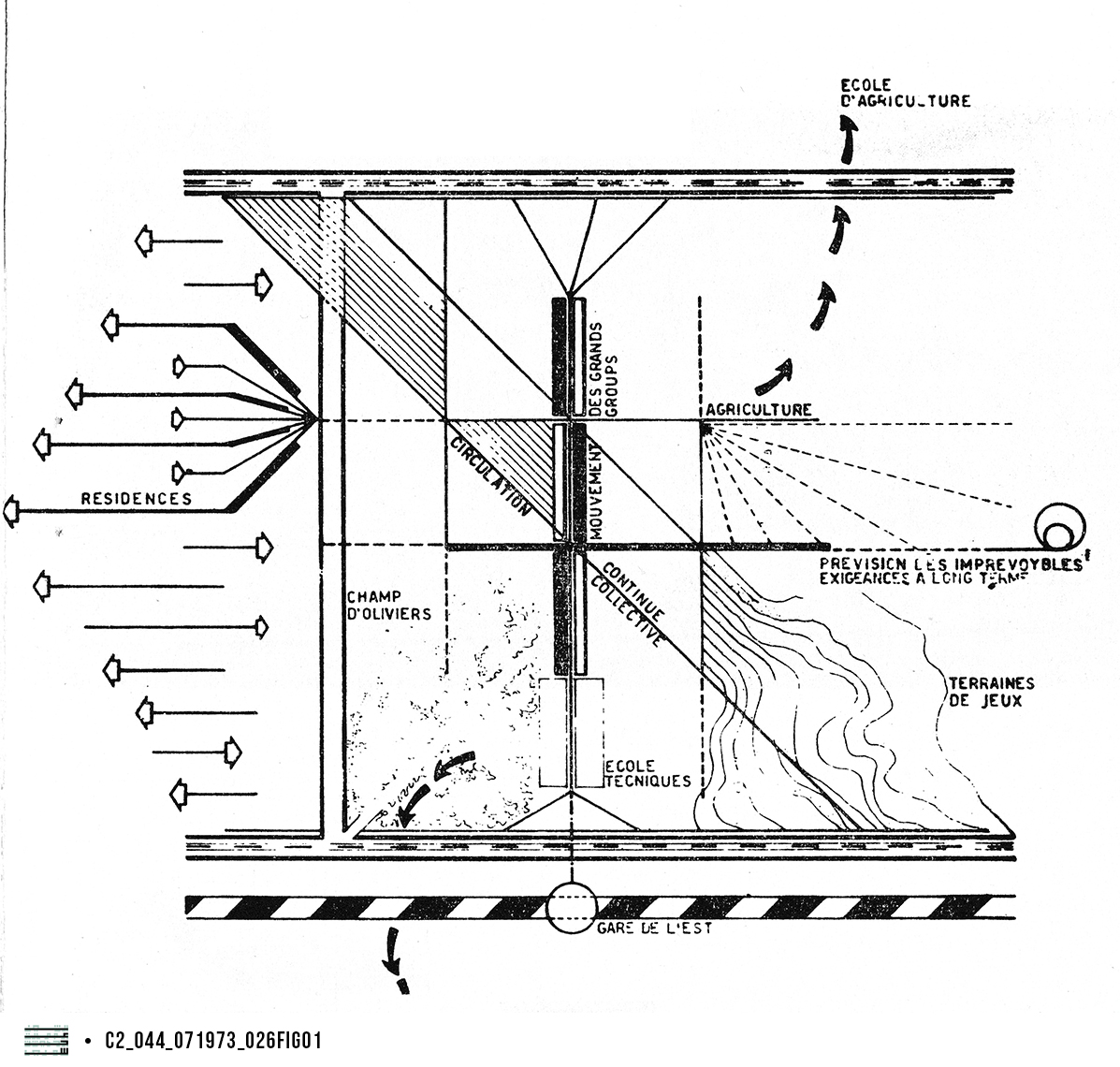
The university site was planned based on a study of the land’s topography, structure, and soil characteristics. Ciamarra proposed a set of planning measures intended to ensure the university’s harmonious integration with its surroundings. Most notably, these included the removal of part of the industrial facilities along Al-Husseini Street to the south in order to extend green spaces toward the sea, as well as the allocation of an adjacent site to accommodate the university’s future expansion. He also called for achieving urban continuity by linking the university to both the existing and the projected city center through a new street connecting Republic Square to Al-Husseini Street and extending toward Yemen Square.
The proposals further included the establishment of a secondary passenger station to the east of the city, adjacent to the railway line and the hill located south of Al-Husseini Street, alongside the preservation of distinctive trees and natural areas, particularly the olive groves to the south and the fields to the northeast. In addition, Ciamarra recommended leveraging the natural ravines to the east and west to define roads and circulation corridors, allocating larger terraced stands for stadiums, and orienting the building axes at a 45-degree angle to confront the prevailing winds and mitigate their impact.05
05 Ibid.
06 Lawlah, “[The Latakia University Project Competition: Study and Analysis],” 13-43.
In his design, Ciamarra adopted a structural principle grounded in the functional separation of educational activities, such as faculties and research centers, from public services, as well as sports, residential, and recreational facilities, while ensuring architectural and spatial interconnections that facilitated communication among the various components through a network of organized spaces.06
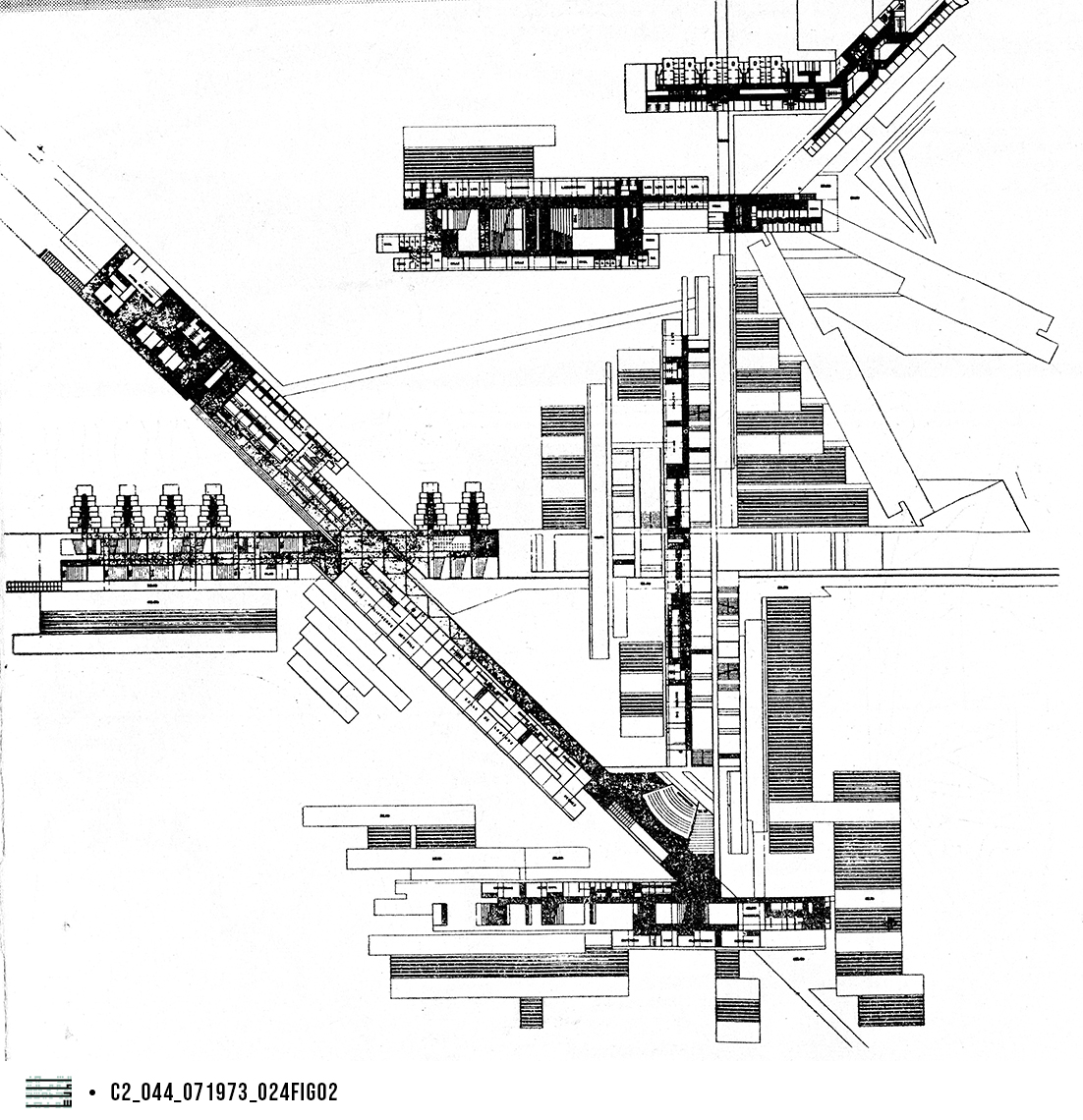
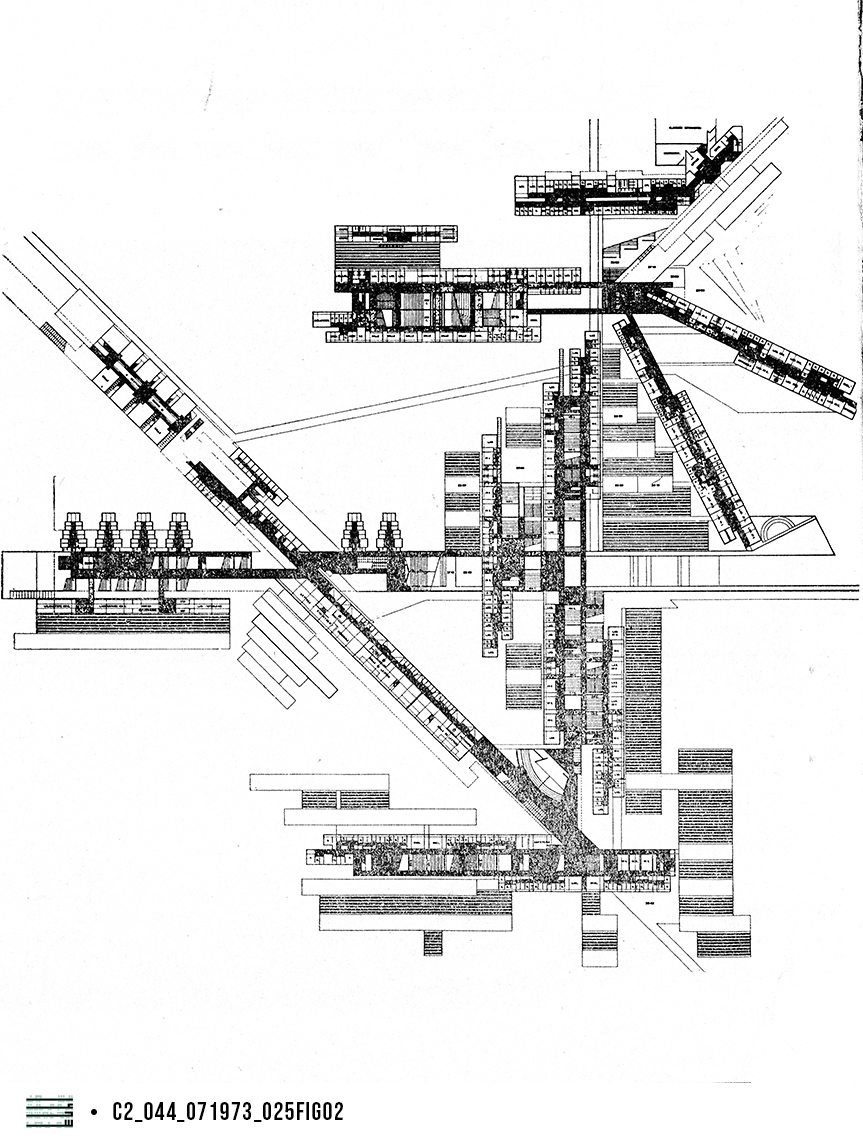
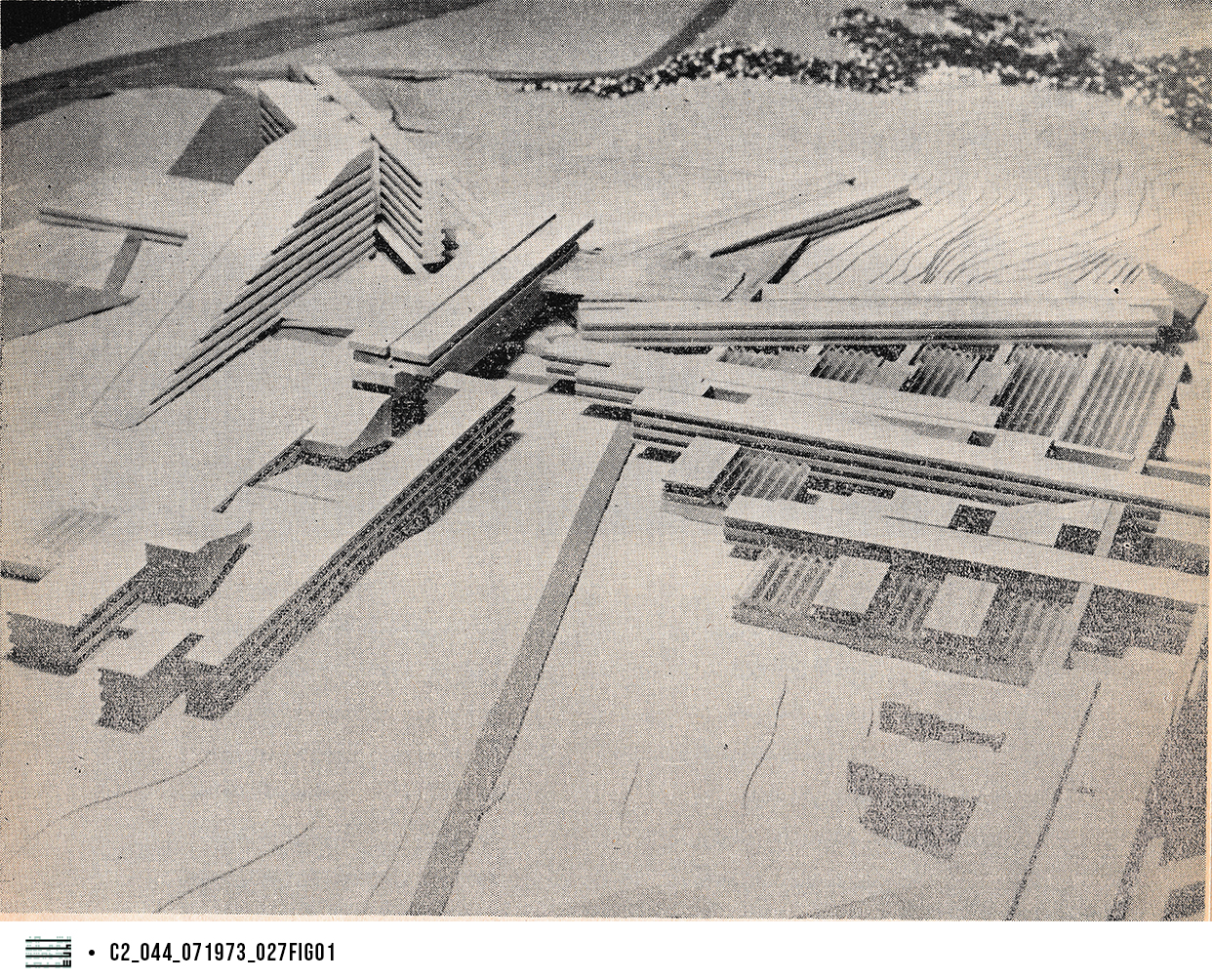
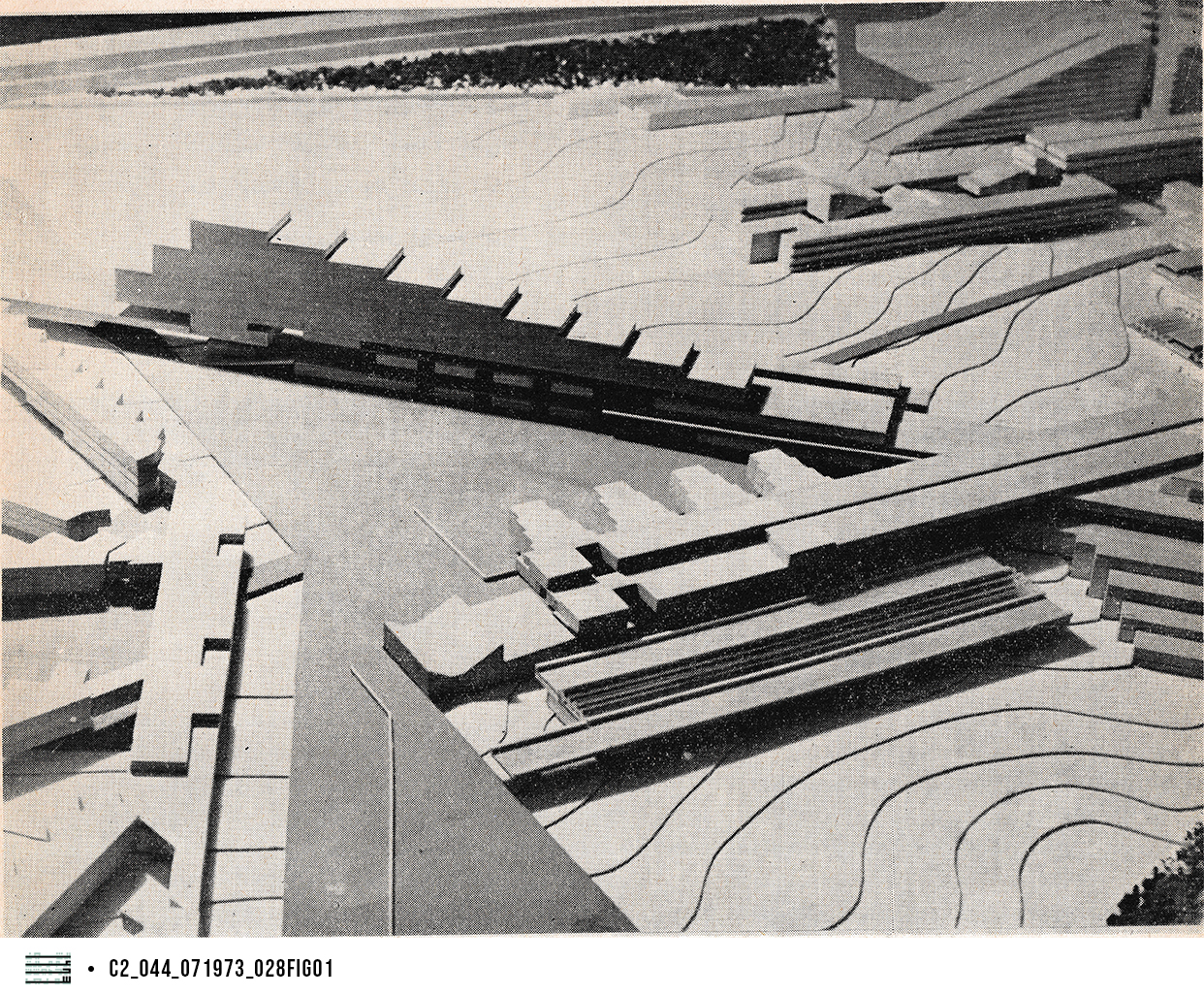
The university’s core design is composed of faculties and research centers connected by a pedestrian network no longer than 400 meters, distributed along two main perpendicular axes. The main entrance is located on the western side at the intersection of the north–south axis, while the secondary entrance is on the southern side along the Al-Husseini Street axis, linked to the proposed passenger station, in addition to independent secondary entrances.
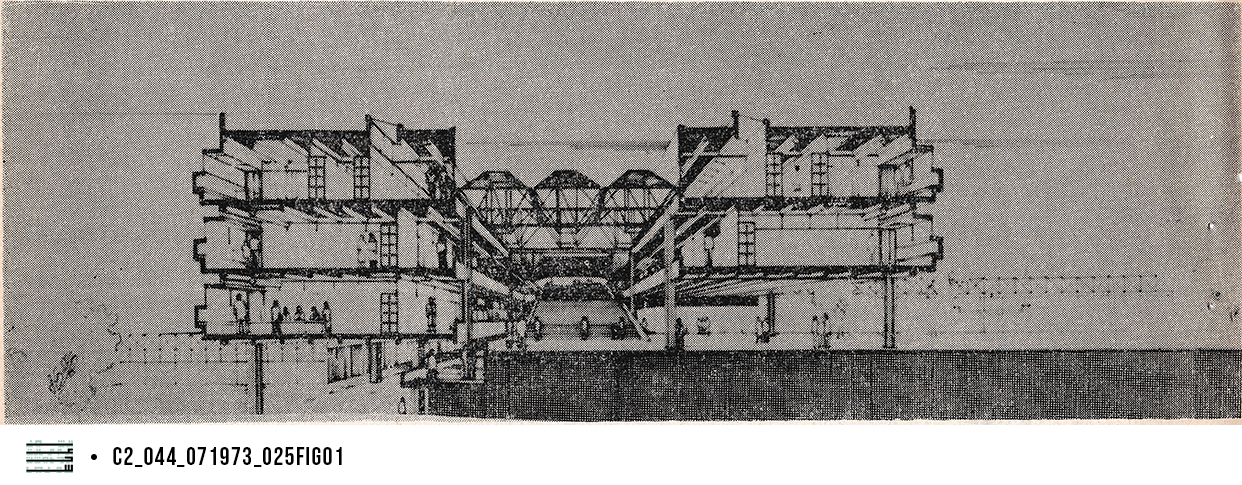
Educational buildings are organized over two or three levels and include offices, laboratories, and classrooms, with heavy laboratories allocated to low-rise structures. Functionally related departments were grouped to form joint academic nodes that encourage interdisciplinary integration. Public services and shared facilities are distributed along a third main axis that intersects the two primary axes at a 45-degree angle. Internal circulation is clearly separated between pedestrians and service traffic: pedestrian movement occurs on an elevated level, from which corridors descend to lower levels, while service traffic is confined to the ground level. Future expansion is planned to the east, although the presence of a small valley there makes construction costly. The western side comprises the largest portion of buildable land due to its flat terrain, while the olive grove in the southwestern corner has been preserved for its environmental and aesthetic value.07
The architect proposed a structural system based on the use of prefabricated elements, such as floors, steps, and beams, fabricated in on-site workshops in order to produce large quantities of repetitive components and to accelerate concrete curing. In the research buildings, 60 cm–deep U-shaped formwork was used, supported by reinforced concrete columns containing a 30 cm–wide central void for the passage of pipes and utilities, and beams were fabricated in lengths of 3 and 9 meters. For classrooms, halls, and terraces, prefabricated elements in the form of inverted Ls measuring 82.5 × 60 cm with a thickness of 12 × 10 cm were employed, combined with lightweight panels to form steps and walkways. These rested on reinforced concrete beams and were secured by upper fixing elements that keep them suspended after the removal of formwork.08
07 Ibid; Concours International Sur Invitation Pour Le Projet De Construction De L’Université: 1973 Lattaquié République Arabe Syrienne.
08 Ibid.
The laboratory buildings are designed on two levels separated by a 3-meter-wide beam, which serves as a walkway and supports thermal, electrical, pneumatic, and hydraulic equipment, and is equipped with openings for maintenance. The central columns were also split in half to allow for the passage of drainage pipes connected to the laboratory roofs. Two solutions were proposed for the roofs of the laboratories: the first employed a 45°-angled steel mesh structure, with the southern sections covered by insulating panels and the northern sections with colored tempered glass; the second used reinforced or prestressed concrete, with the northern sections entirely glazed. The covering elements rest on prefabricated beams 12 meters long, spaced at the same intervals, and include channels for rainwater drainage into pipes integrated within the central columns.
The committee was impressed by the dynamism of Ciamarra’s project and its student-oriented approach, as well as its spatial organization based on clear axes that harmonize with the city’s open spaces, considering that the architectural expression results from the intersection of these axes and the dynamism of the building blocks, with comparatively less emphasis on open voids.
The committee raised several observations, most notably that the main entrance, located at the far western edge and following certain shared activities, could hinder the project’s connection to the eastern expansion area, and that the layout of the central square might negatively impact surrounding functions. They also highlighted the potential for noise disturbances in the Humanities section. Reservations were expressed regarding the location of the artificial lake, as it did not take advantage of the natural slopes, thereby limiting the expansion of intermediate institutes. The committee further noted weak connectivity between the residential areas and the sports facilities, as well as unclear pedestrian routes and residential parking arrangements.
Finally, they considered the project complex to execute in phases due to the proximity of workshops and the varying dimensions of the prefabricated elements, and estimated the project cost at approximately 181 million Syrian pounds (approximately 46 million USD at the time).
01 Concours International Sur Invitation Pour Le Projet De Construction De L’Université: 1973 Lattaquié République Arabe Syrienne (Lattakia: 1973).
02 Alaa al-Din Lawlah, “Musābaqat Mashrūʿ Jāmiʿat al-Lādhiqiyya: Dirāsa wa-Taḥlīl [The Latakia University Project Competition: Study and Analysis],” The Arab Engineer, July 1973, 13-43. The Arab Engineer magazine collection, Archive of Modern Architecture in Syria (AMASyria).
03 Concours International Sur Invitation Pour Le Projet De Construction De L’Université: 1973 Lattaquié République Arabe Syrienne.
04 Ibid.
05 Ibid.
06 Lawlah, “[The Latakia University Project Competition: Study and Analysis],” 13-43.
07 Ibid; Concours International Sur Invitation Pour Le Projet De Construction De L’Université: 1973 Lattaquié République Arabe Syrienne.
08 Concours International Sur Invitation Pour Le Projet De Construction De L’Université: 1973 Lattaquié République Arabe Syrienne.