Latakia University design proposal - Rambald Von Steinbuchel
The University of Latakia was established by Legislative Decree No. 12 of 1971. The design of its campus was selected through a limited architectural competition, to which a number of internationally renowned architects were invited. Among them was the German architect Rambald Von Steinbuchel, whose proposal was awarded first prize in the competition.
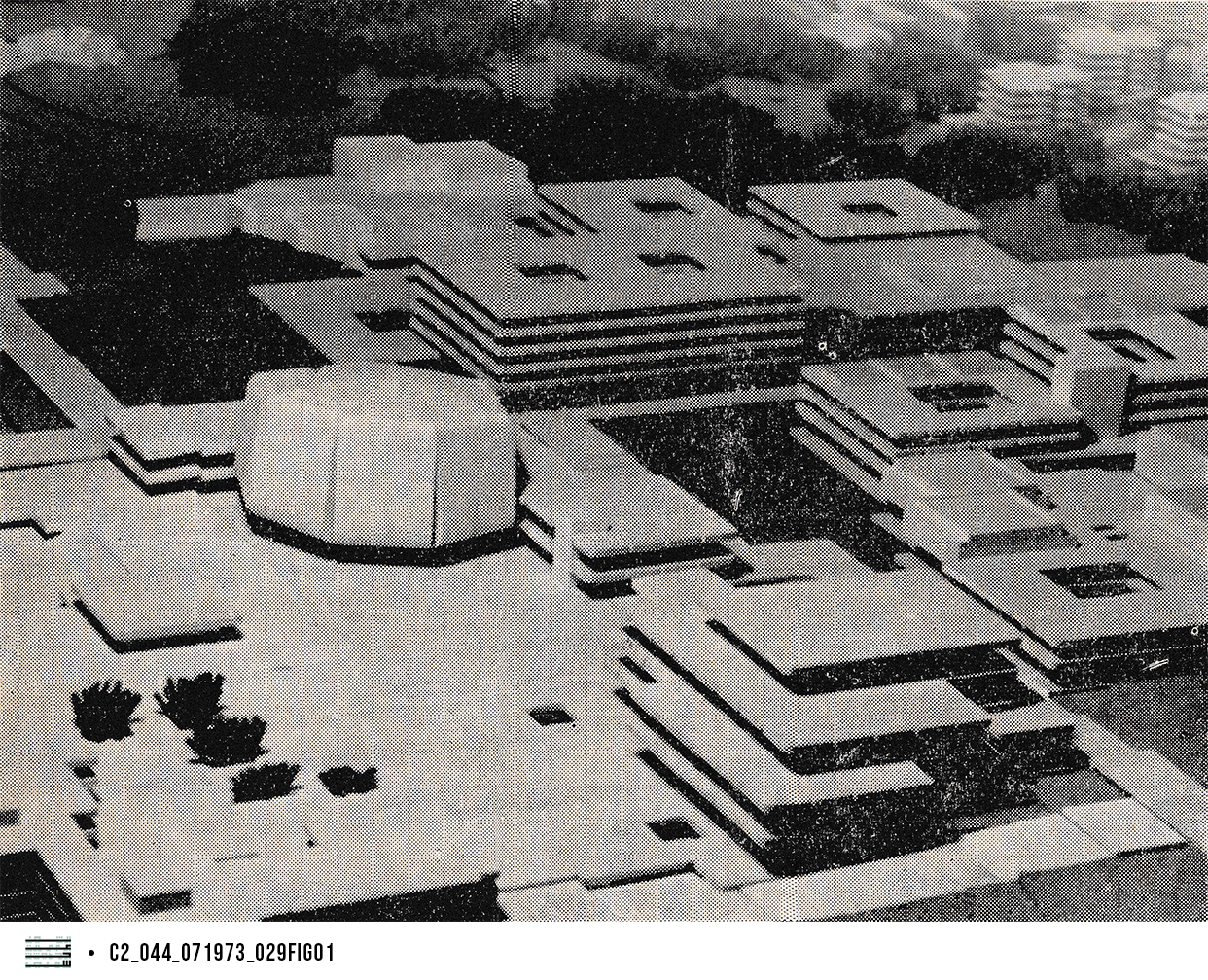
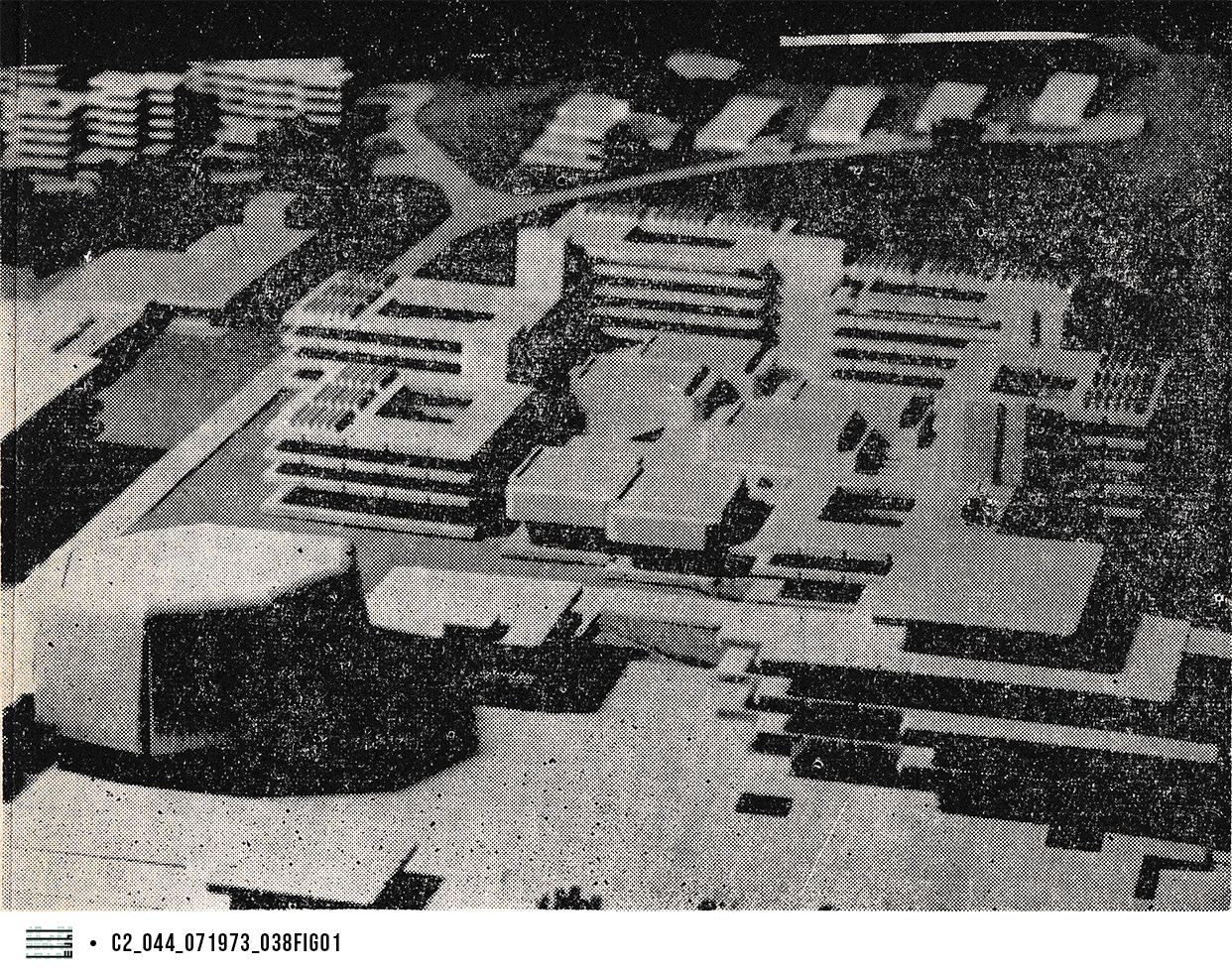
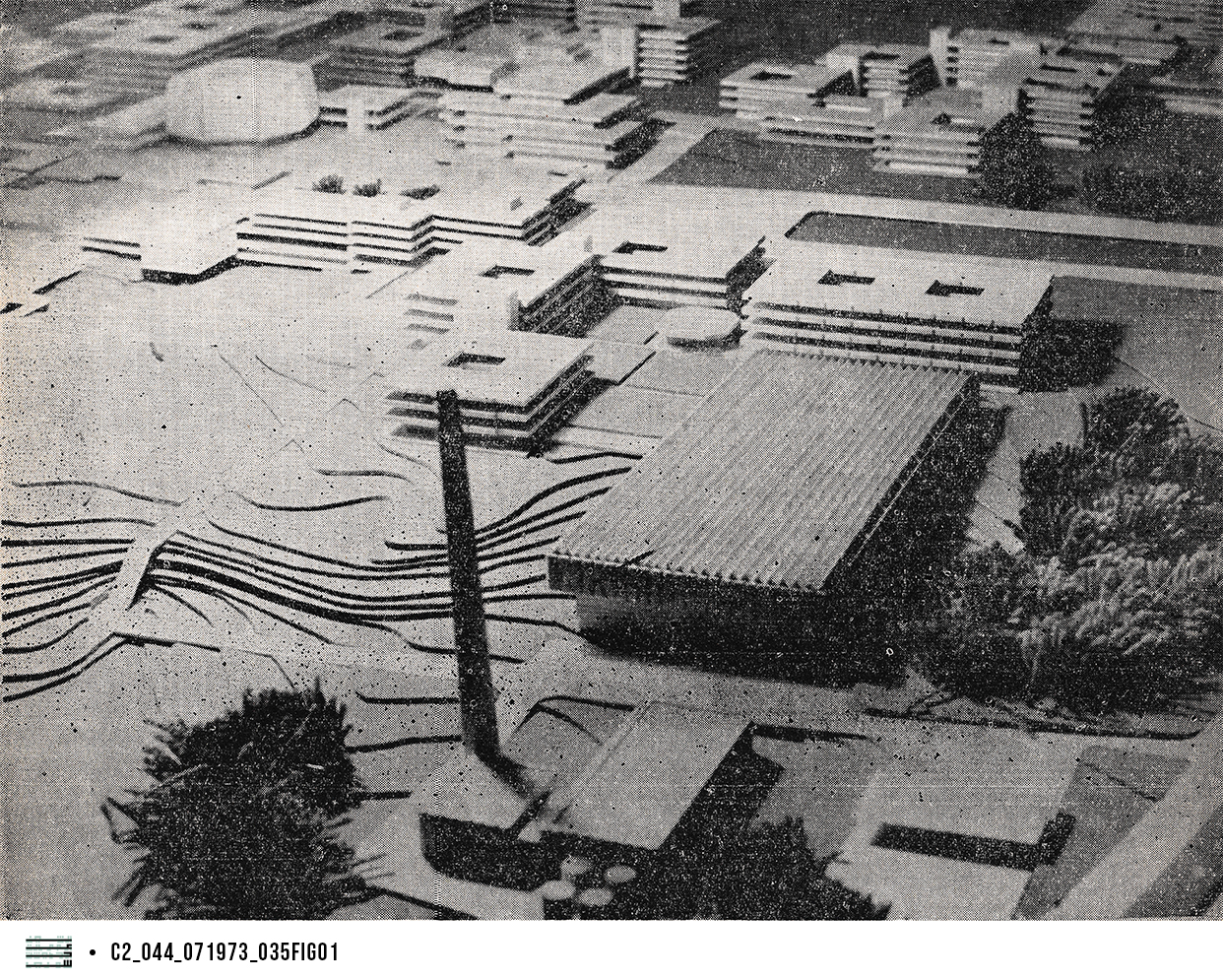
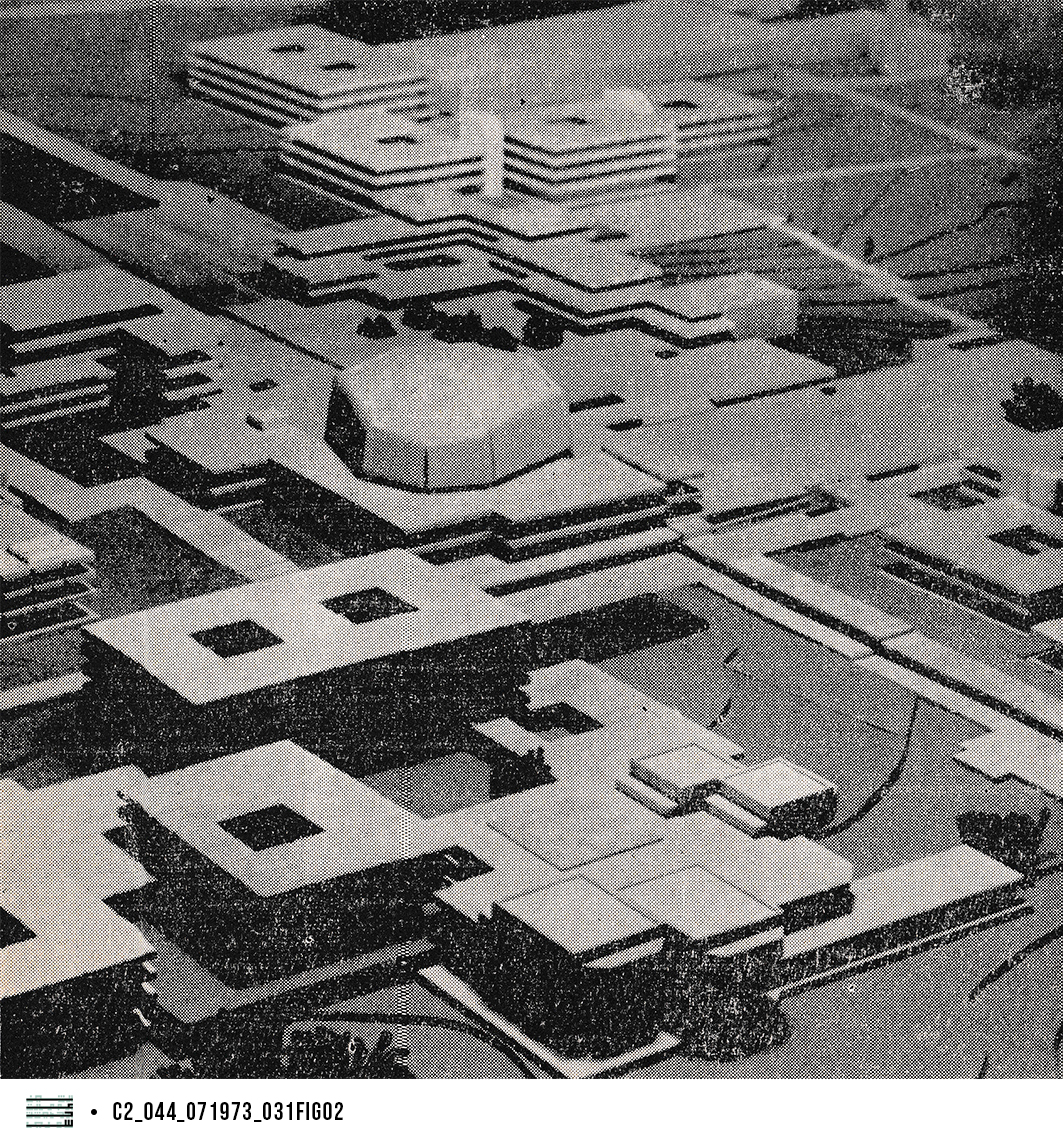
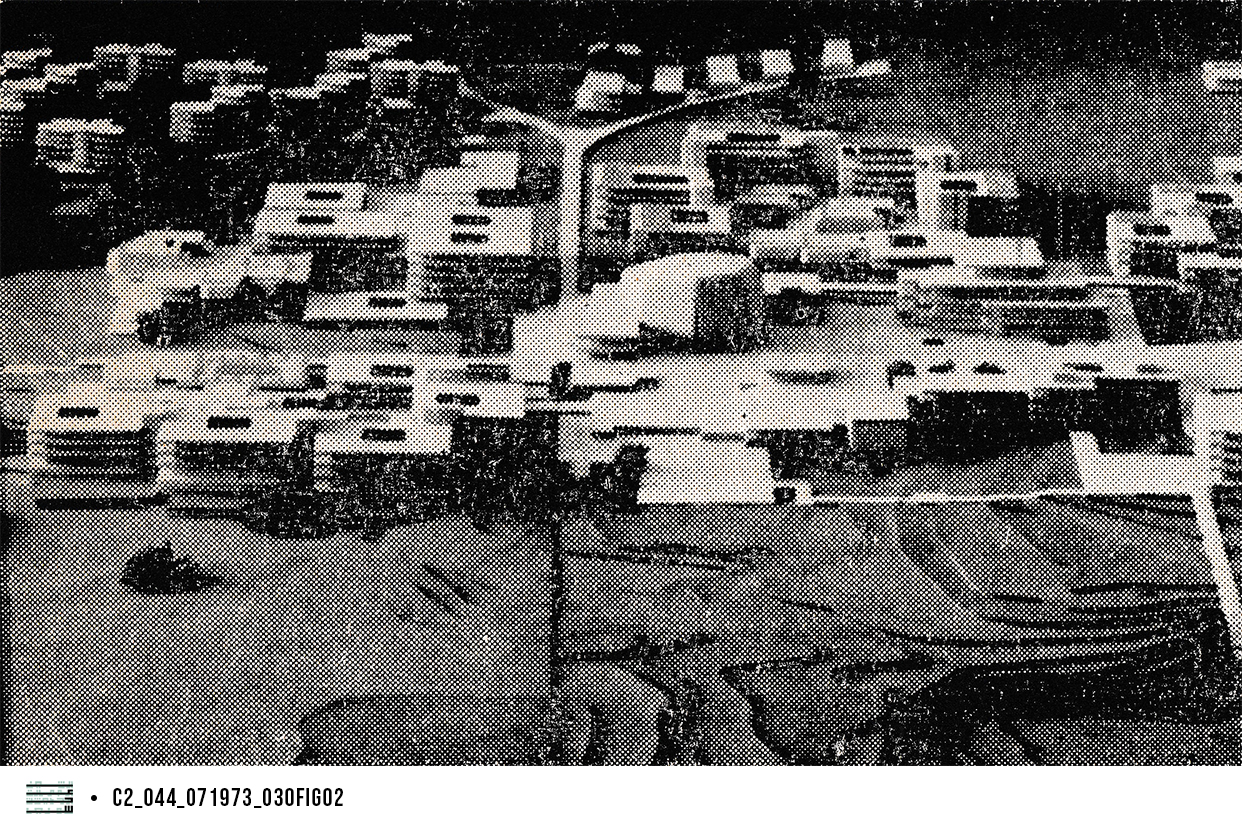
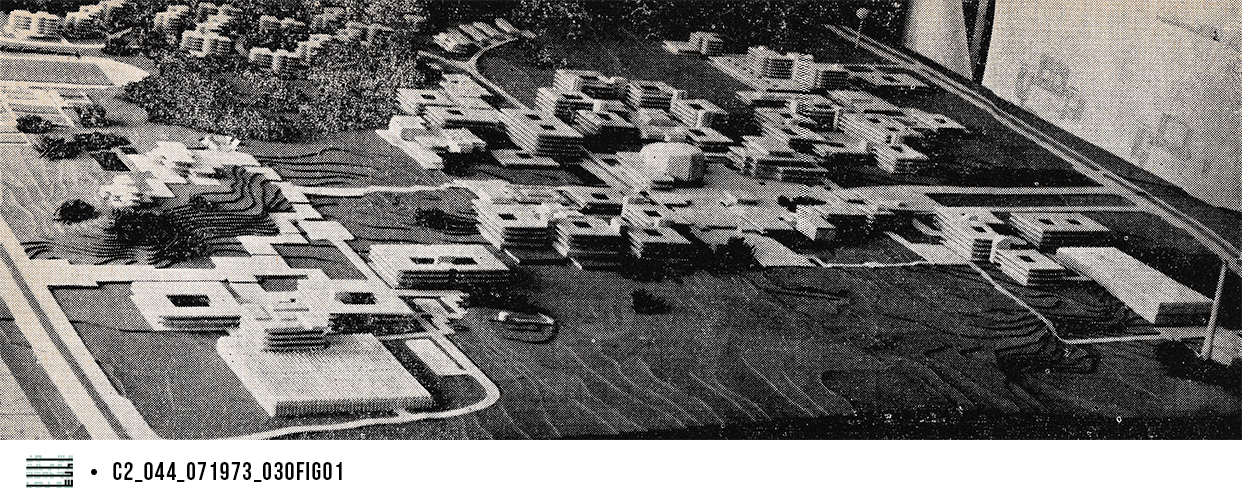
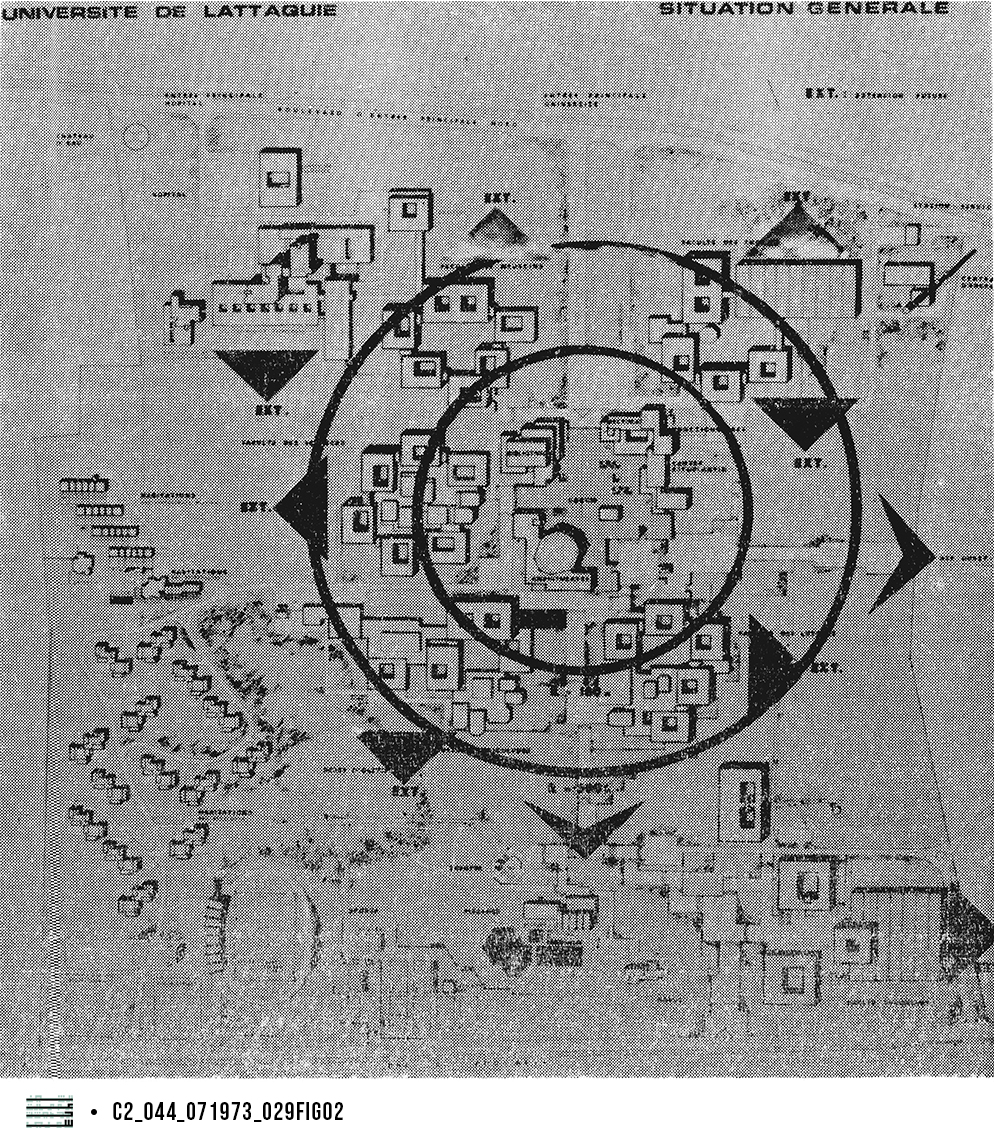
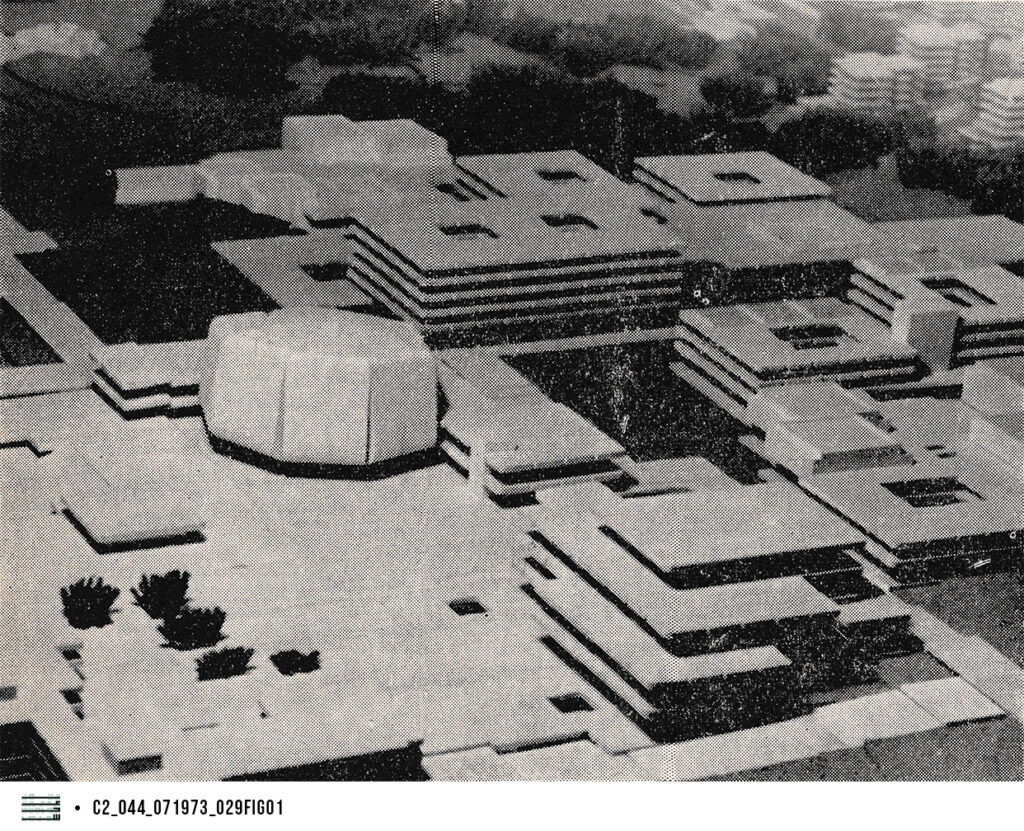
Buchel’s design is based on an interconnected spatial organization that links architectural blocks around a series of central open spaces. It relies on two intersecting primary axes that define the overall structure of the campus. The first, a north–south axis, serves as the main entrance spine, connecting movement across the campus from north to south, with pedestrian pathways branching off toward the various functions. The second, an east–west axis, is conceived as the line of future expansion toward the eastern lands.01
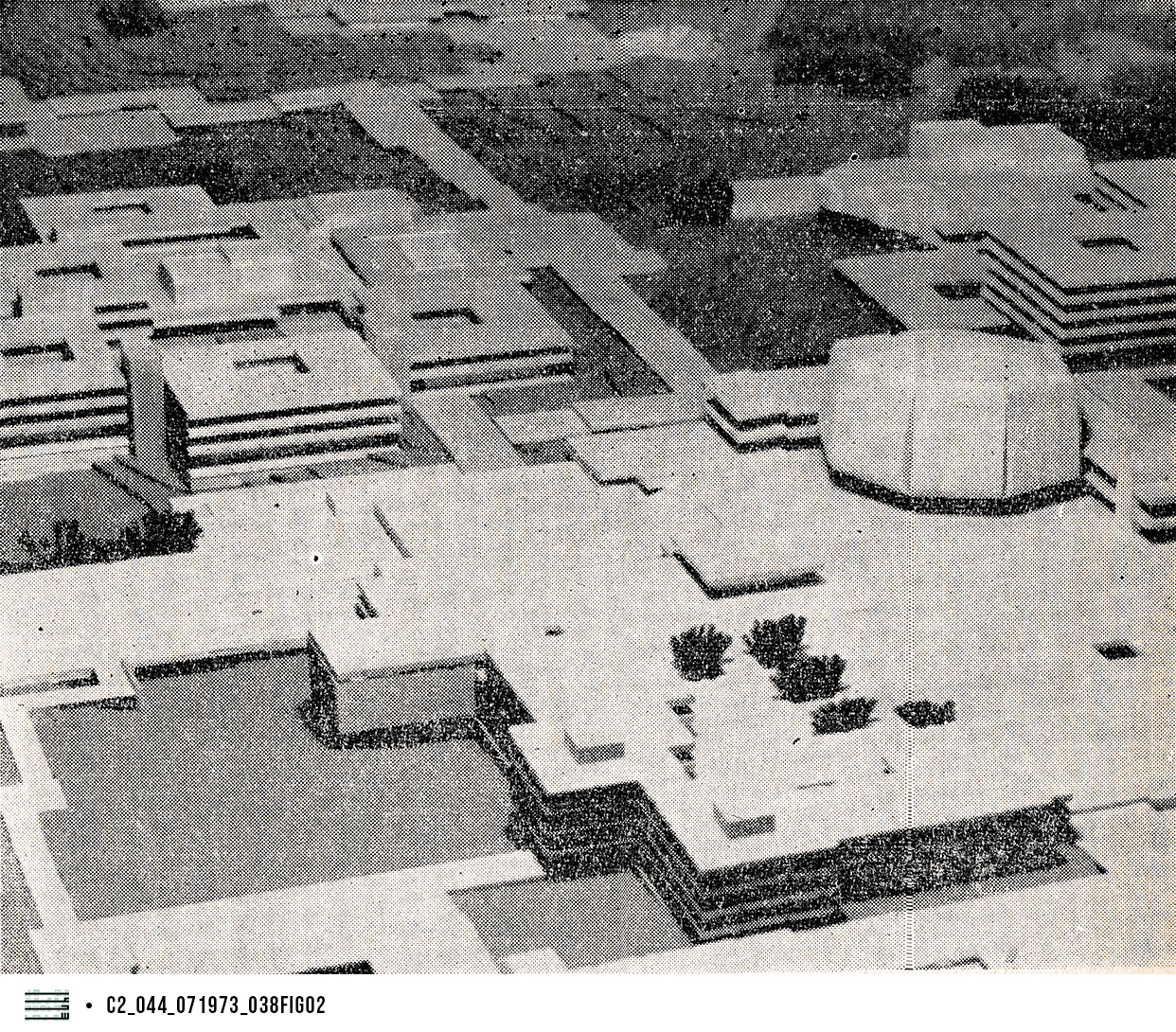
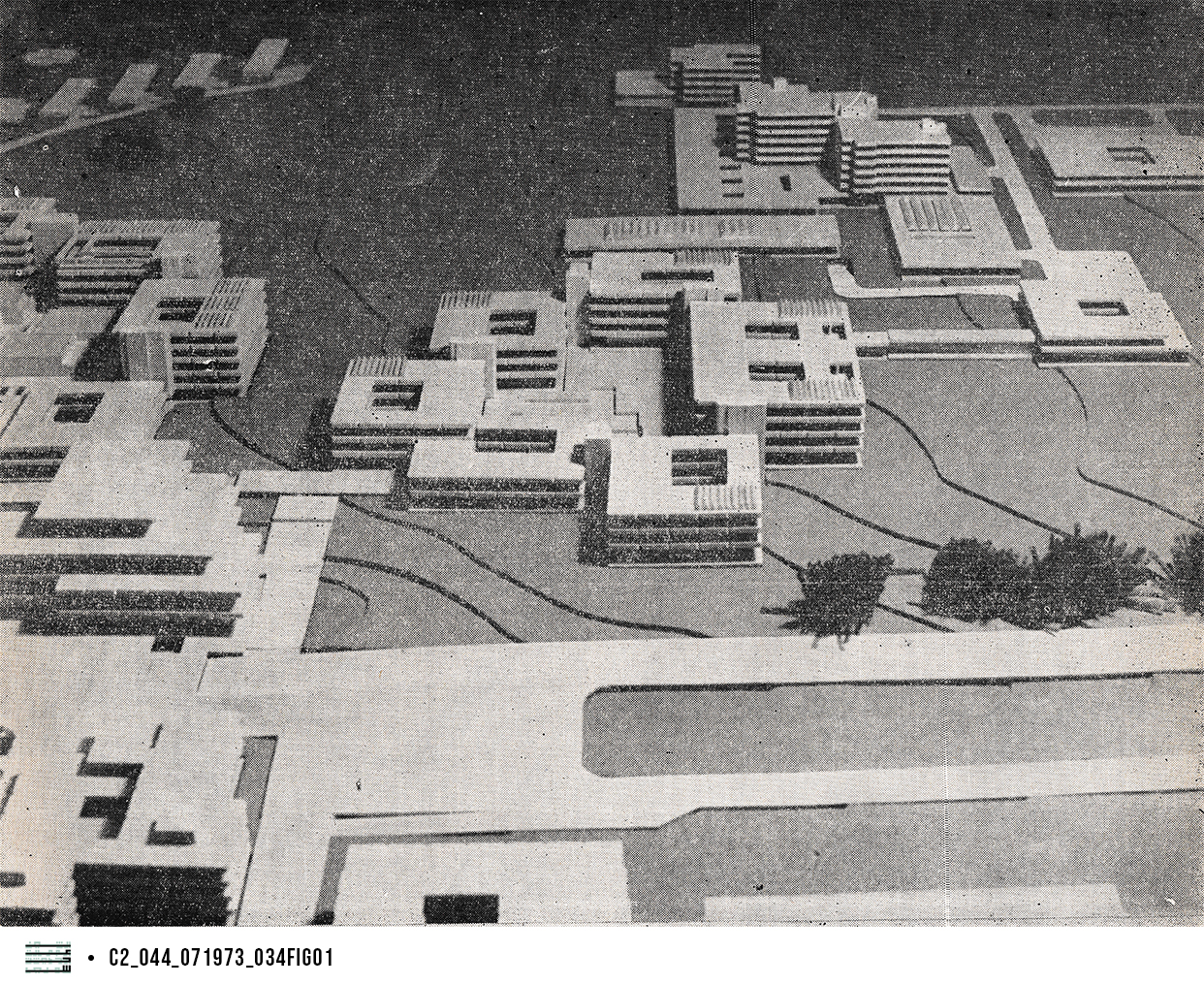
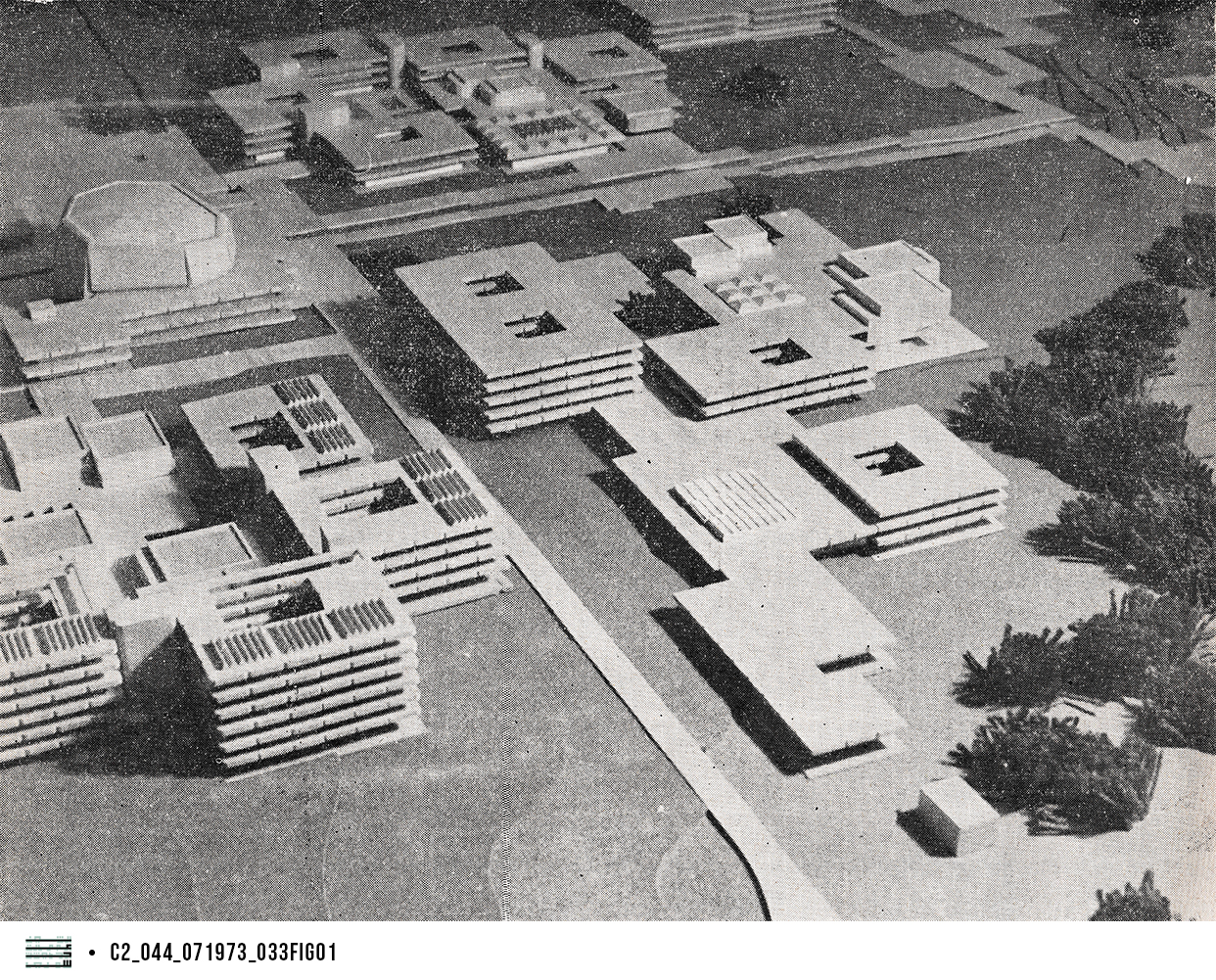
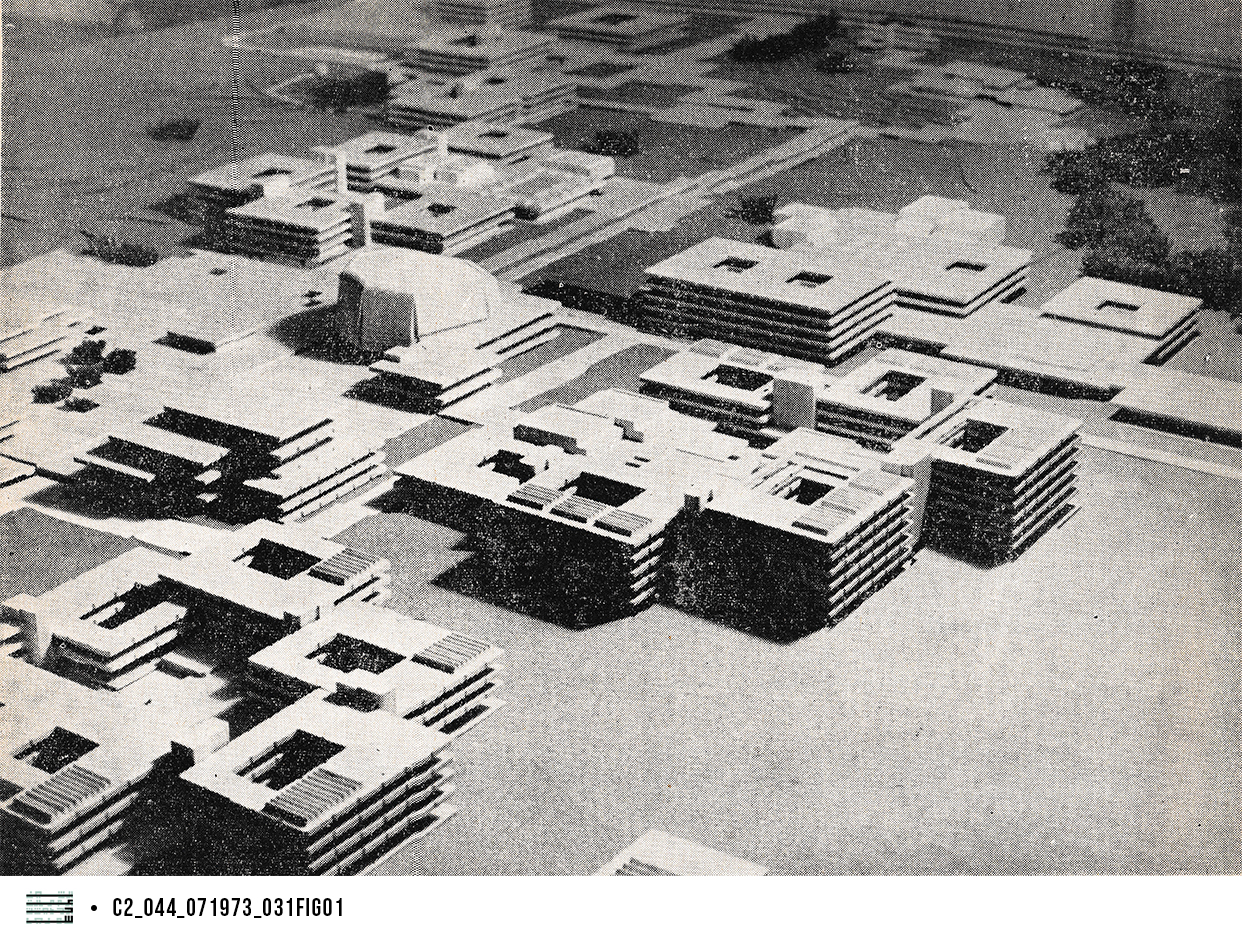
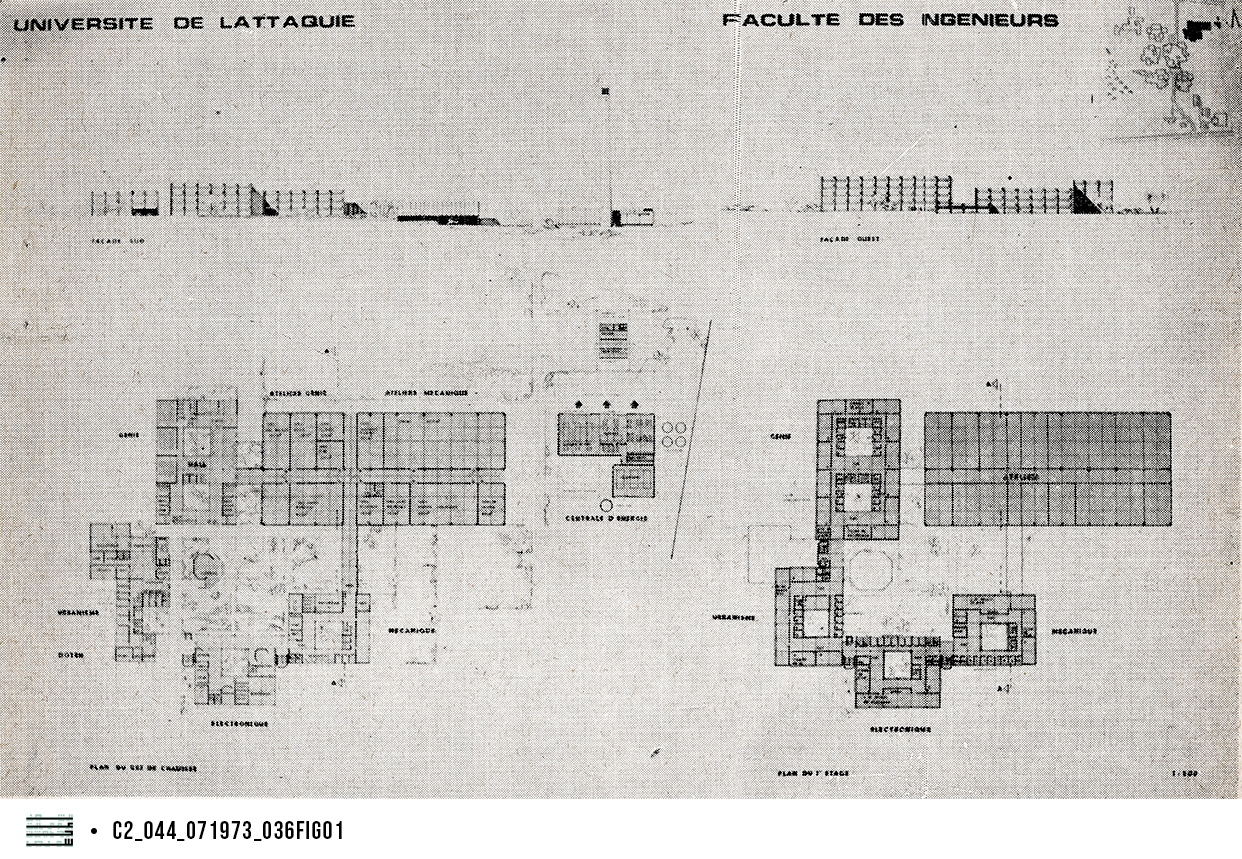
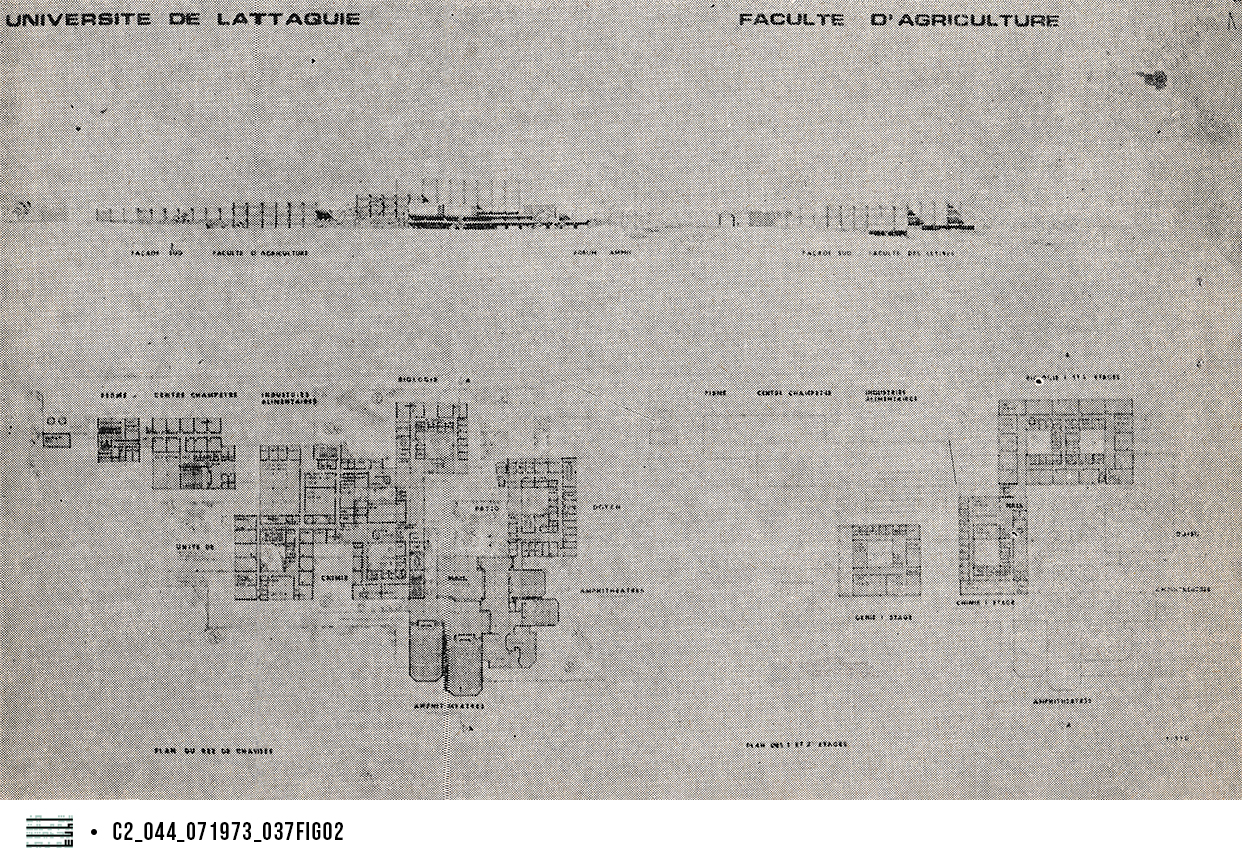
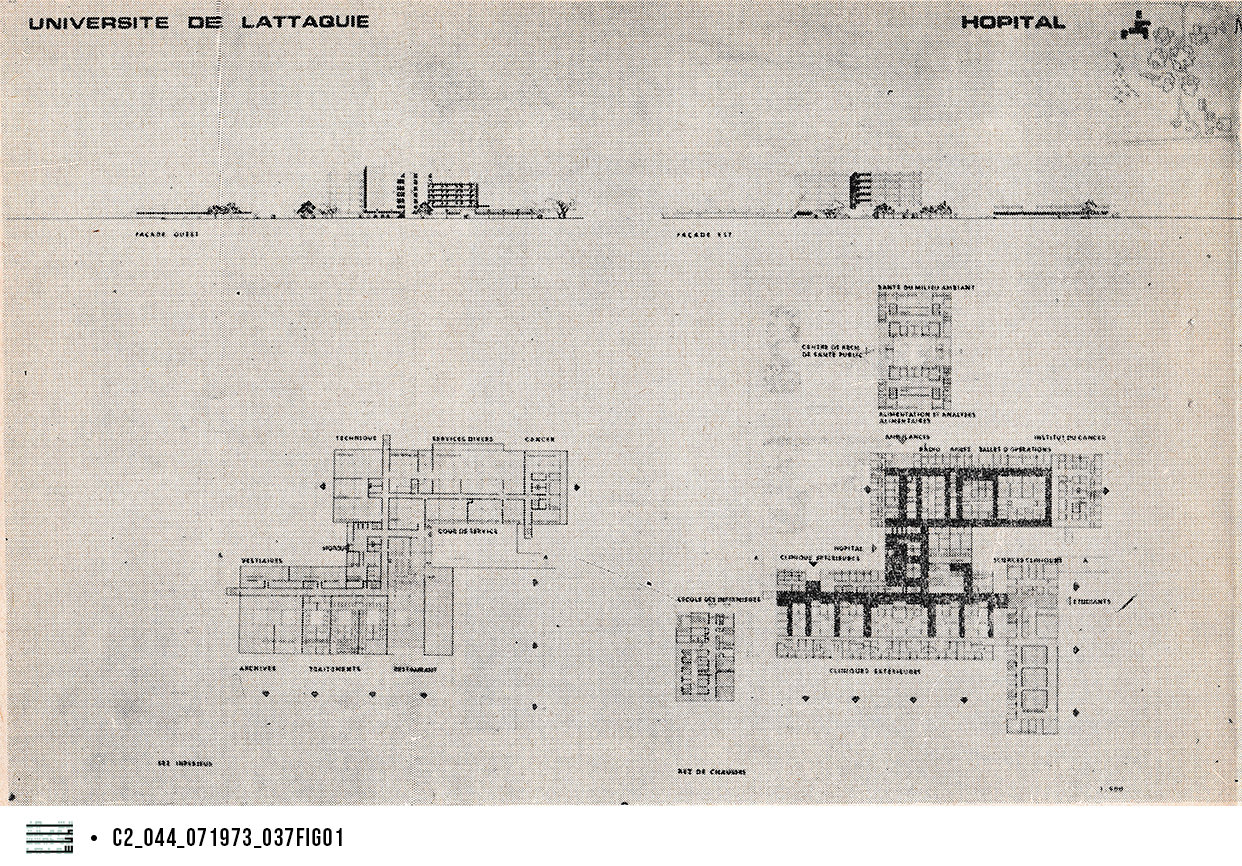
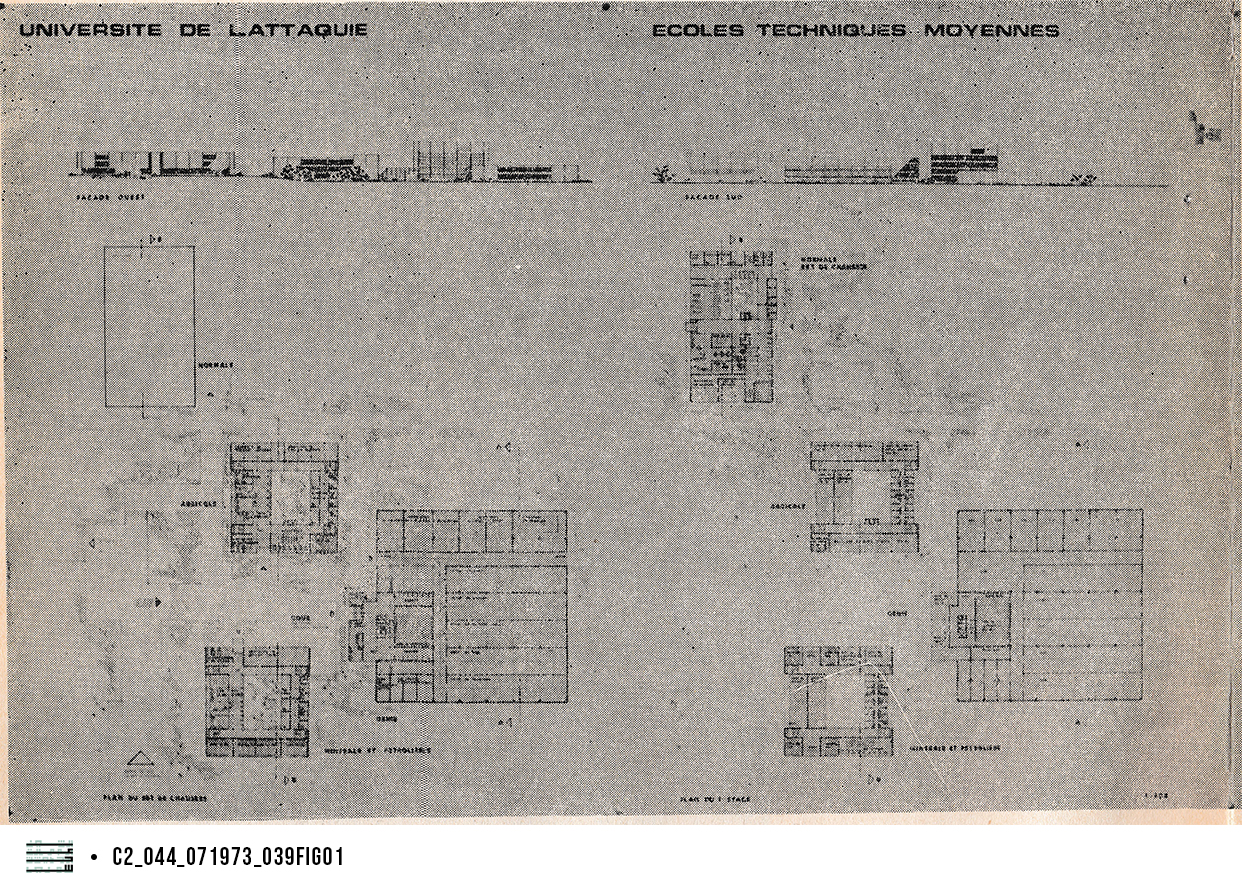
The two axes intersect at a large central plaza, which functions as the core of the university and its principal gathering space. The central plaza was distinguished by its singularity in form, scale, and function, as it constituted the nucleus of the university. Architectural forms predominantly employed the square, drawing inspiration from the traditional Arab house. Faculties were designed so that the buildings of each faculty were consolidated within a single, distinct building mass, avoiding architectural repetition and reinforcing the identity of each faculty.
01 Alaa al-Din Lawlah, “Musābaqat Mashrūʿ Jāmiʿat al-Lādhiqiyya: Dirāsa wa-Taḥlīl [The Latakia University Project Competition: Study and Analysis],” The Arab Engineer, July 1973, 13-43. The Arab Engineer magazine collection, Archive of Modern Architecture in Syria (AMASyria).
02 Lawlah, “[The Latakia University Project Competition: Study and Analysis],” 13-43.
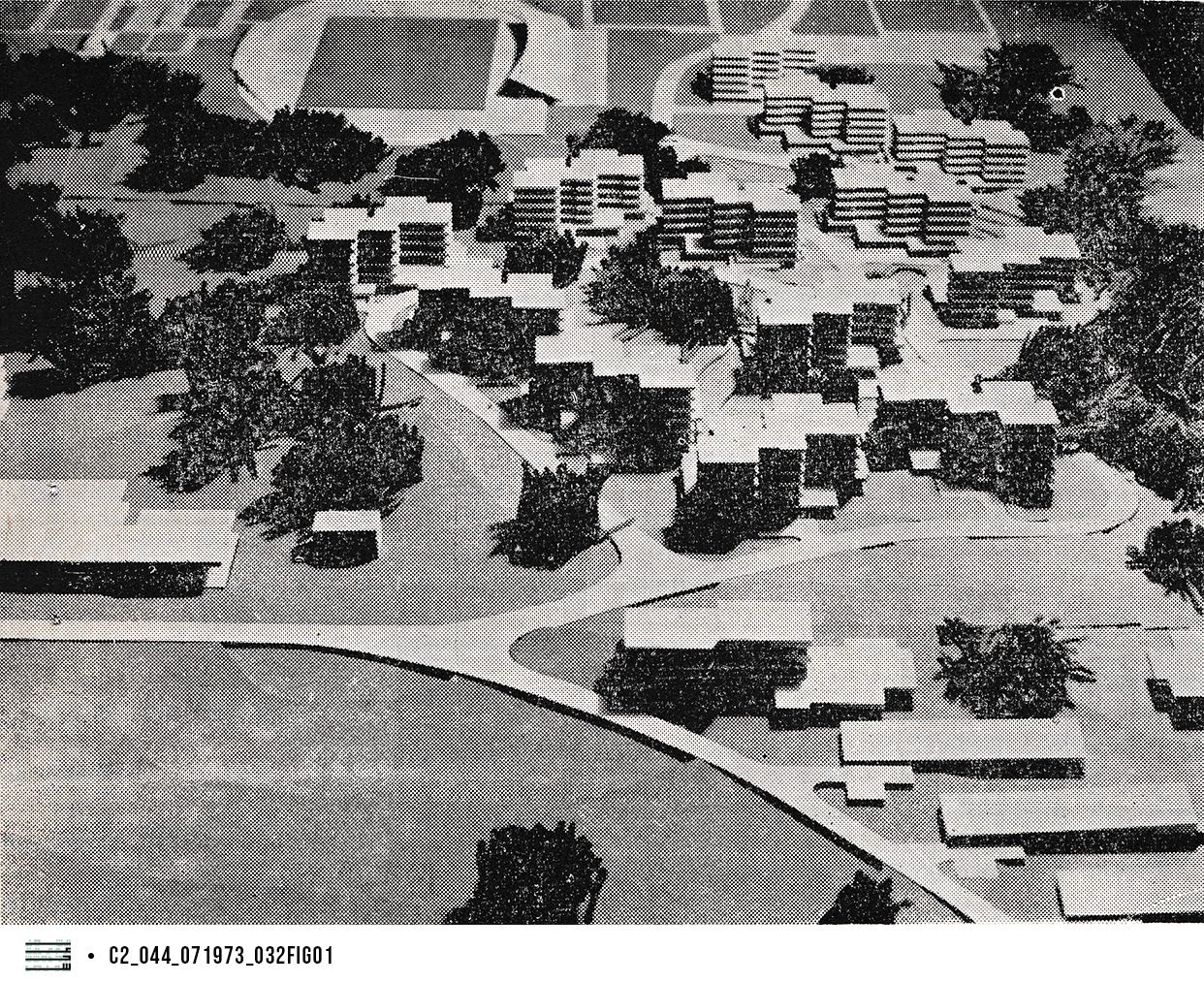
Each faculty is composed of interconnected buildings linked by vertical circulation elements and organized around a green internal courtyard, allowing for phased construction according to need. Buchel’s proposal is further characterized by a carefully considered distribution of functions, which accounted for the reciprocal relationship between the university and the city, as well as external movement patterns, while providing opportunities for future expansion structured around the central plaza.02
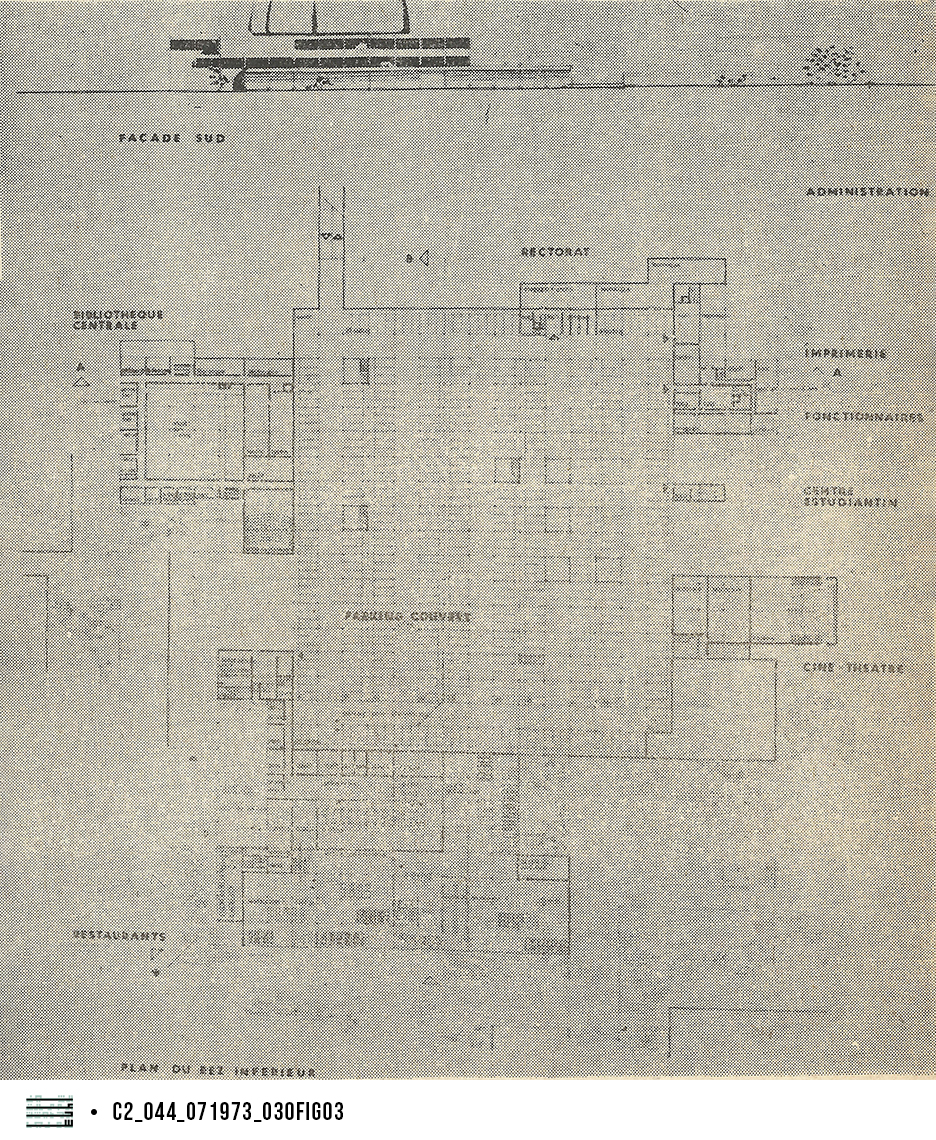
The central plaza accommodates several key buildings, including the university administration and offices, the main university restaurant, a public cafeteria, the central library, and a large lecture hall with a capacity of 2,000 seats. In the south-eastern corner, at the point where the plaza meets the east–west axis, a wide terraced platform steps down toward the area designated for future expansion. The faculties are functionally connected to the central plaza with the aim of generating continuous movement between the core and the various parts of the university.03
The façades in the proposal are characterized by an overall sense of coherence. The corners of the building masses are articulated by slightly projecting vertical elements, repeated at regular intervals, and integrated with horizontal sun-shading devices that protect the glazed openings behind them from direct sunlight. Most buildings are finished with exposed concrete spray and a unified paint treatment, while the colors of the shading devices vary from one building to another. The windows associated with vertical circulation elements, such as staircases and elevators, are expressed as continuous vertical openings, distinguishing them from the rest of the façade. The designer adopted a basic architectural module measuring 7.50 × 7.50 meters, which was extended beyond the buildings to structure the plazas and landscaped areas.04
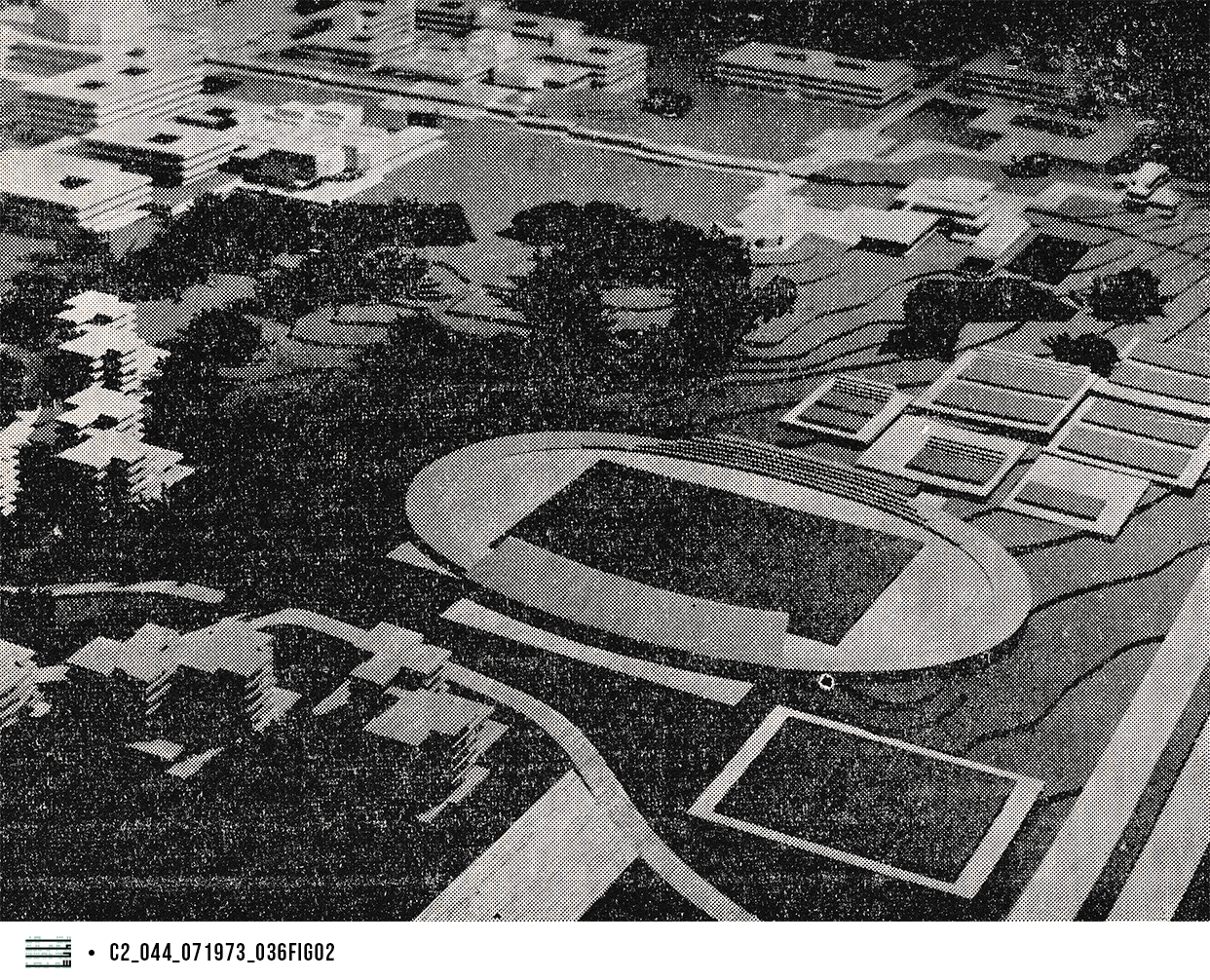
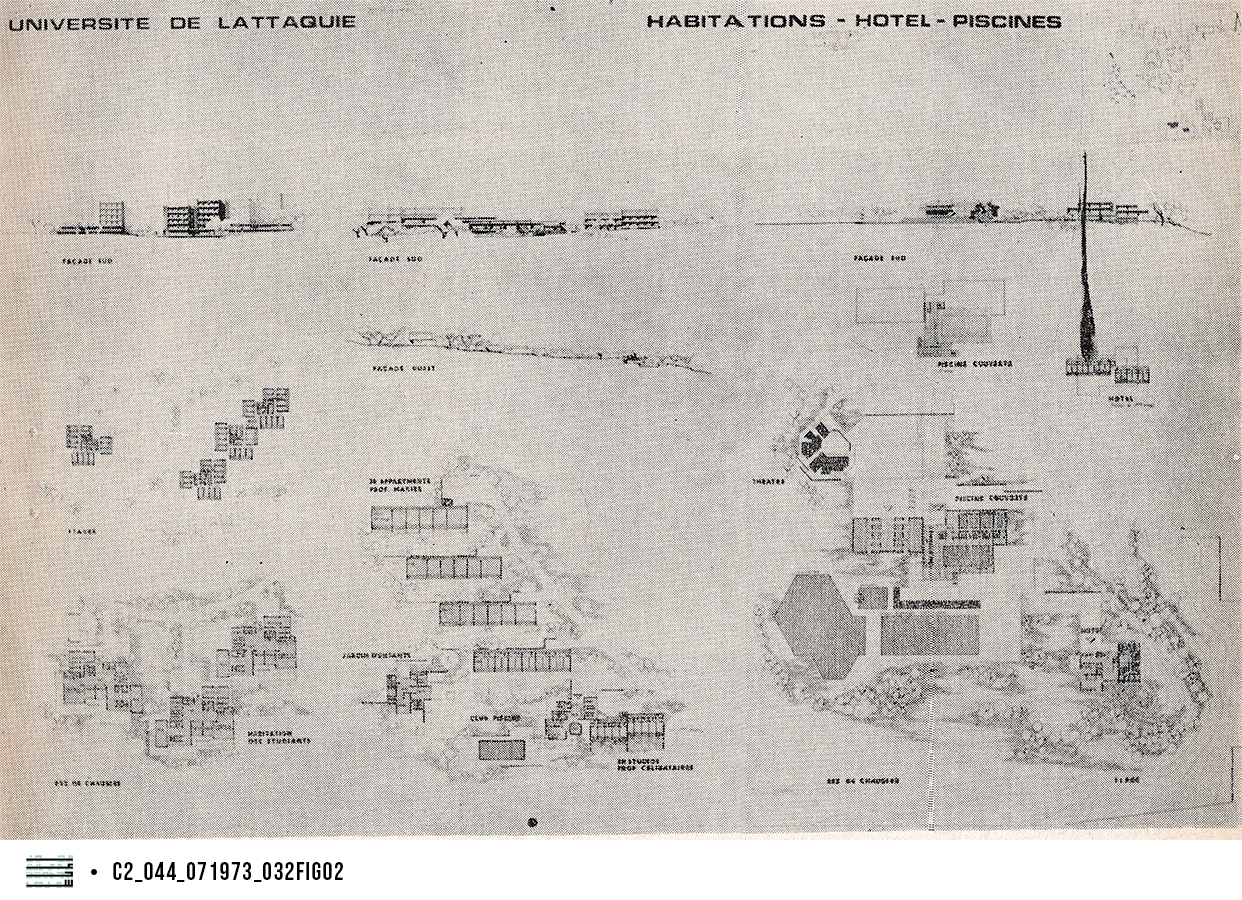
The final jury report confirmed the clarity of the overall scheme in Buchel’s project and its capacity to establish smooth relationships between the different functions of the university complex. The committee praised the organization of the buildings around the main plaza, which endowed the project with a distinctive architectural and spatial unity, as well as its response to the site’s topography through the strategic use of elevated terrain for construction. However, the jury also noted several shortcomings, including the overlap between pedestrian and vehicular access at the main entrance, inadequate connectivity serving the Faculty of Arts, and the routing of a service road for the Faculties of Agriculture and Science through the residential zone. In addition, the location of the accommodation area resulted in the loss of olive groves. The committee further observed that the proposed internal expansion required design modifications to ensure proper connectivity.05
03 Ibid.
04 Ibid.
05 Naman al-Zein, “Taqrīr Lajnat al-Taḥkīm [The Jury Committee Report],” The Arab Engineer, July 1973. 44-51. The Arab Engineer magazine collection, Archive of Modern Architecture in Syria (AMASyria).
06 Ibid.
Dr. Nihad Jamil Abdullah also criticized the characterization of the project as “Arab architecture,” arguing that the use of internal courtyards was not appropriate for modern buildings due to increased floor heights. The cost of Buchel’s project was estimated at 144,454,650 Syrian pounds (approximately 37 Million USD at the time), and the jury selected it as the winning proposal in accordance with Article Ten of the conditions governing the establishment of the University of Latakia.06
01 Alaa al-Din Lawlah, “Musābaqat Mashrūʿ Jāmiʿat al-Lādhiqiyya: Dirāsa wa-Taḥlīl [The Latakia University Project Competition: Study and Analysis],” The Arab Engineer, July 1973, 13-43. The Arab Engineer magazine collection, Archive of Modern Architecture in Syria (AMASyria).
02 Lawlah, “[The Latakia University Project Competition: Study and Analysis],” 13-43.
03 Ibid.
04 Ibid.
05 Naman al-Zein, “Taqrīr Lajnat al-Taḥkīm [The Jury Committee Report],” The Arab Engineer, July 1973. 44-51. The Arab Engineer magazine collection, Archive of Modern Architecture in Syria (AMASyria).
06 Ibid.